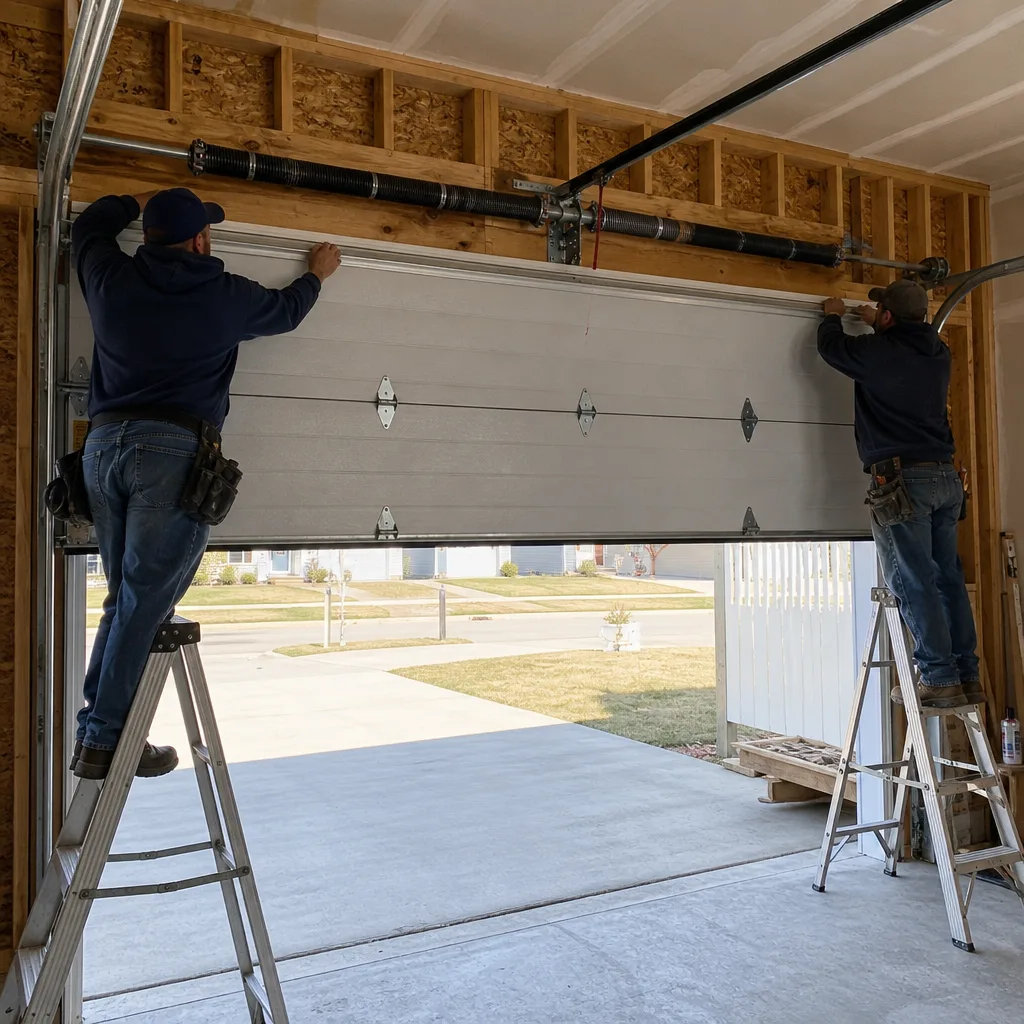
Last updated November 22, 2026
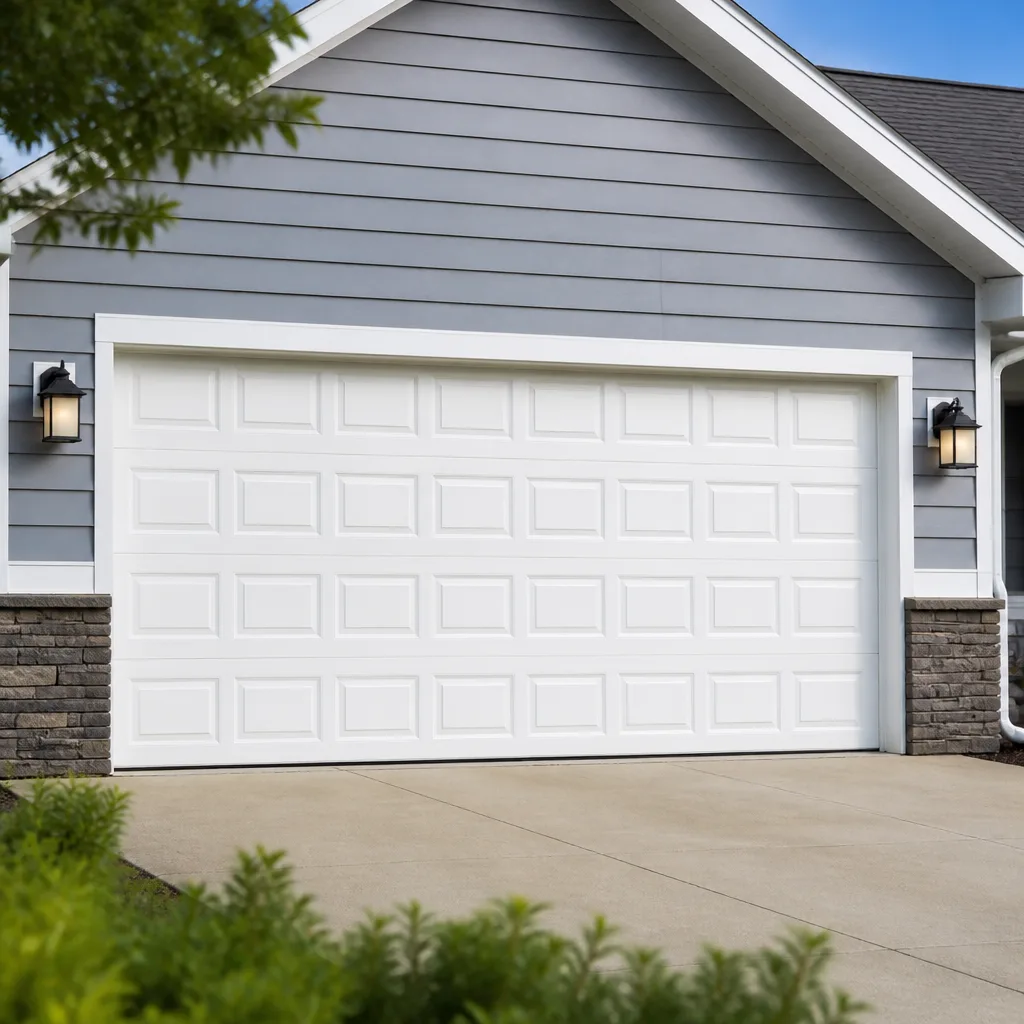 Raised-panel steel
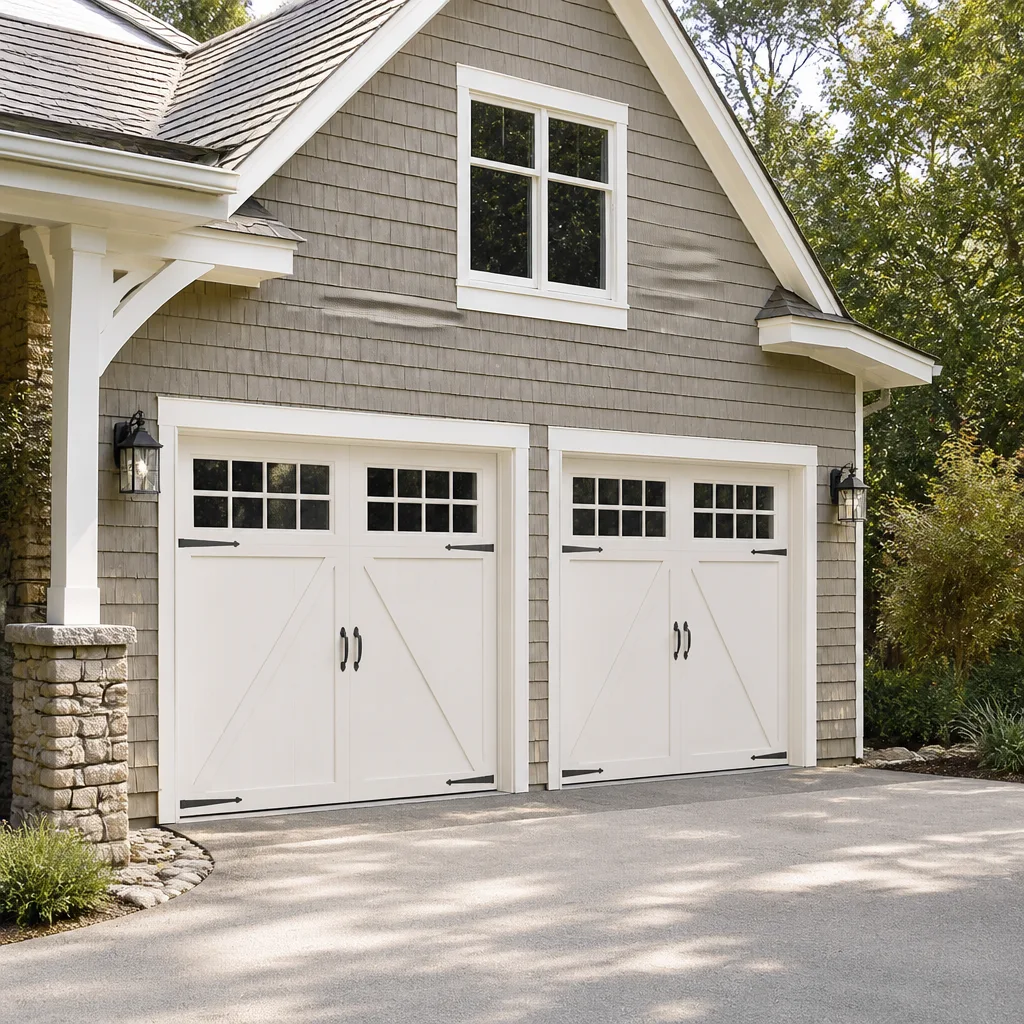 Carriage house
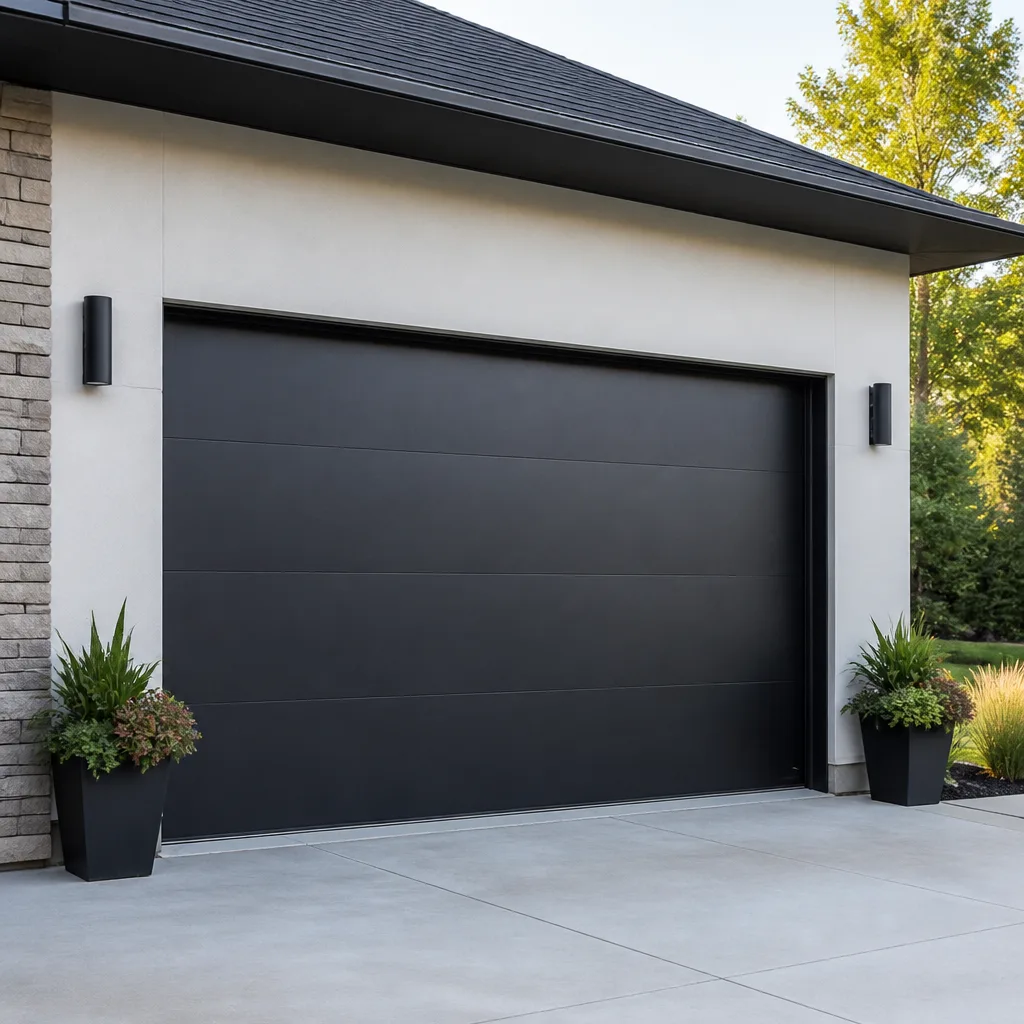 Modern flush
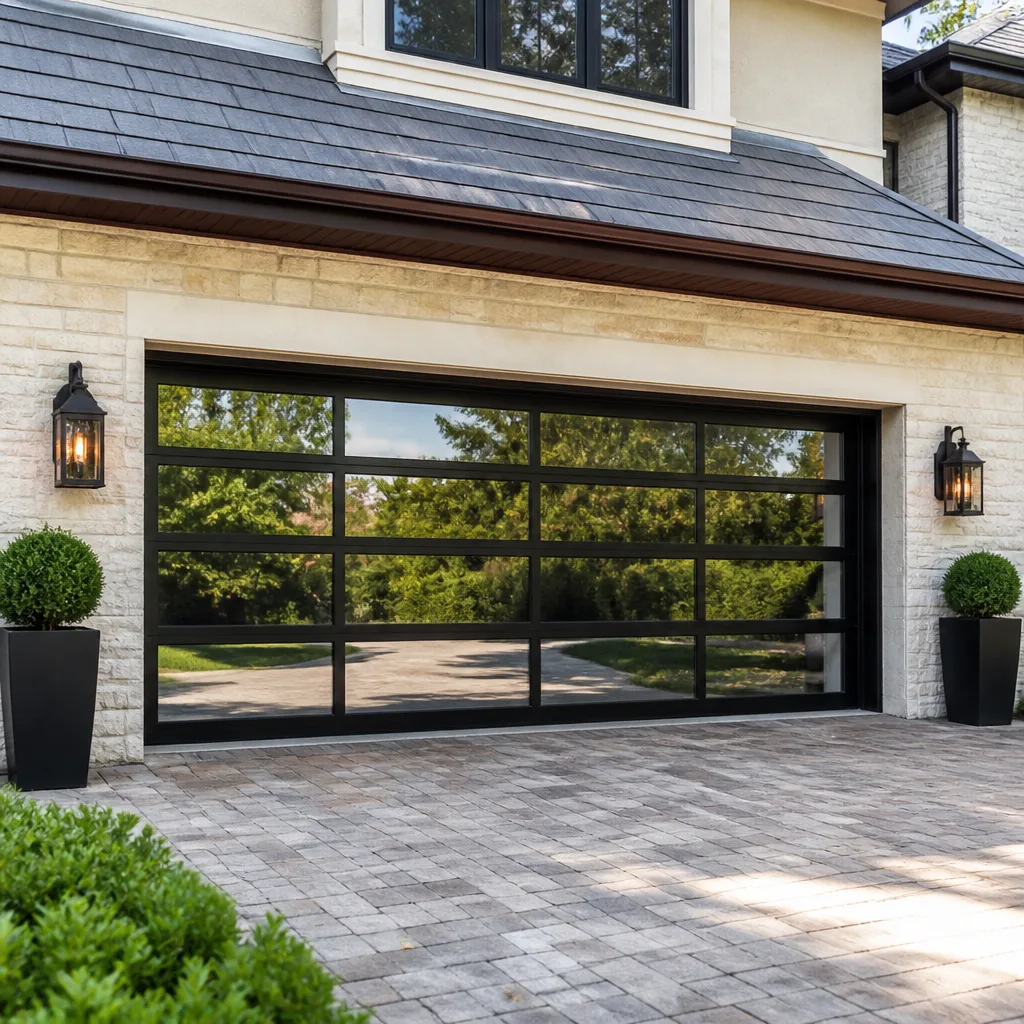 Full-view glass
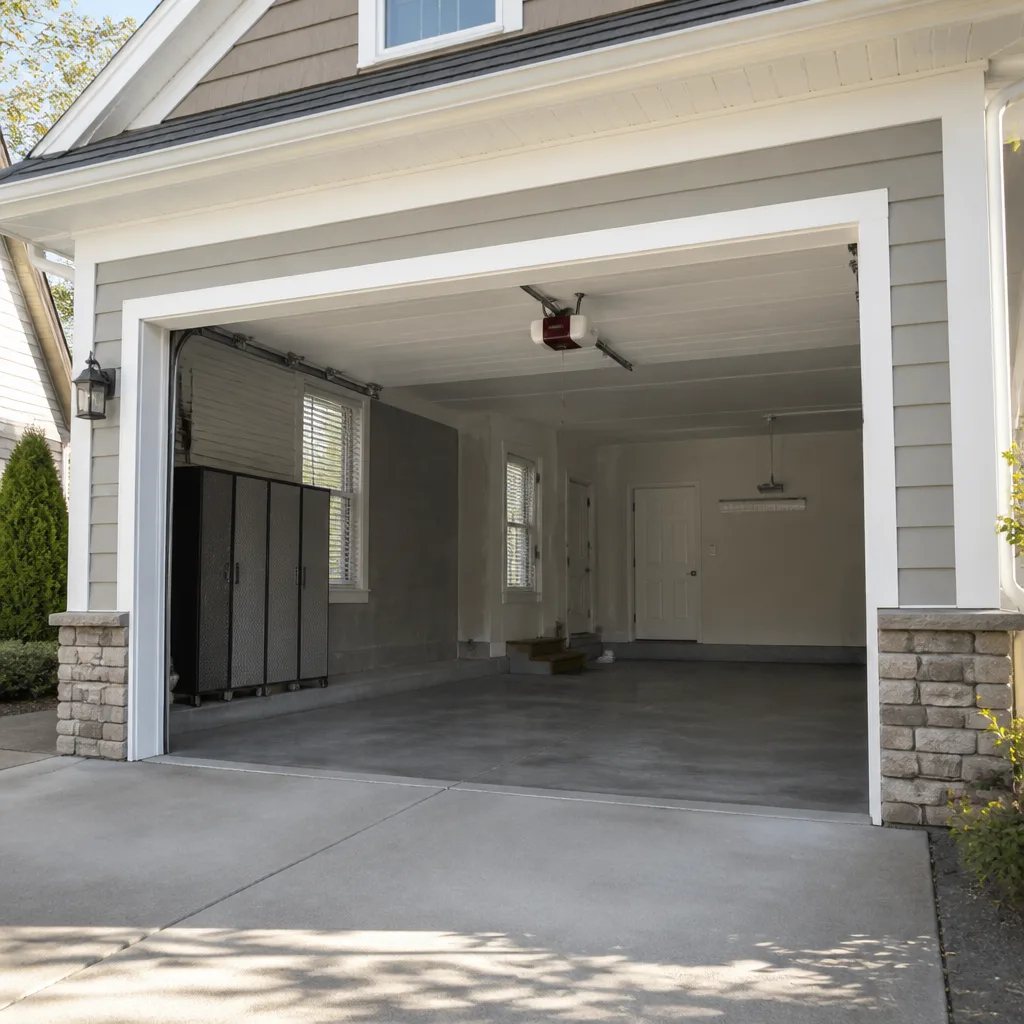 LiftMaster openers
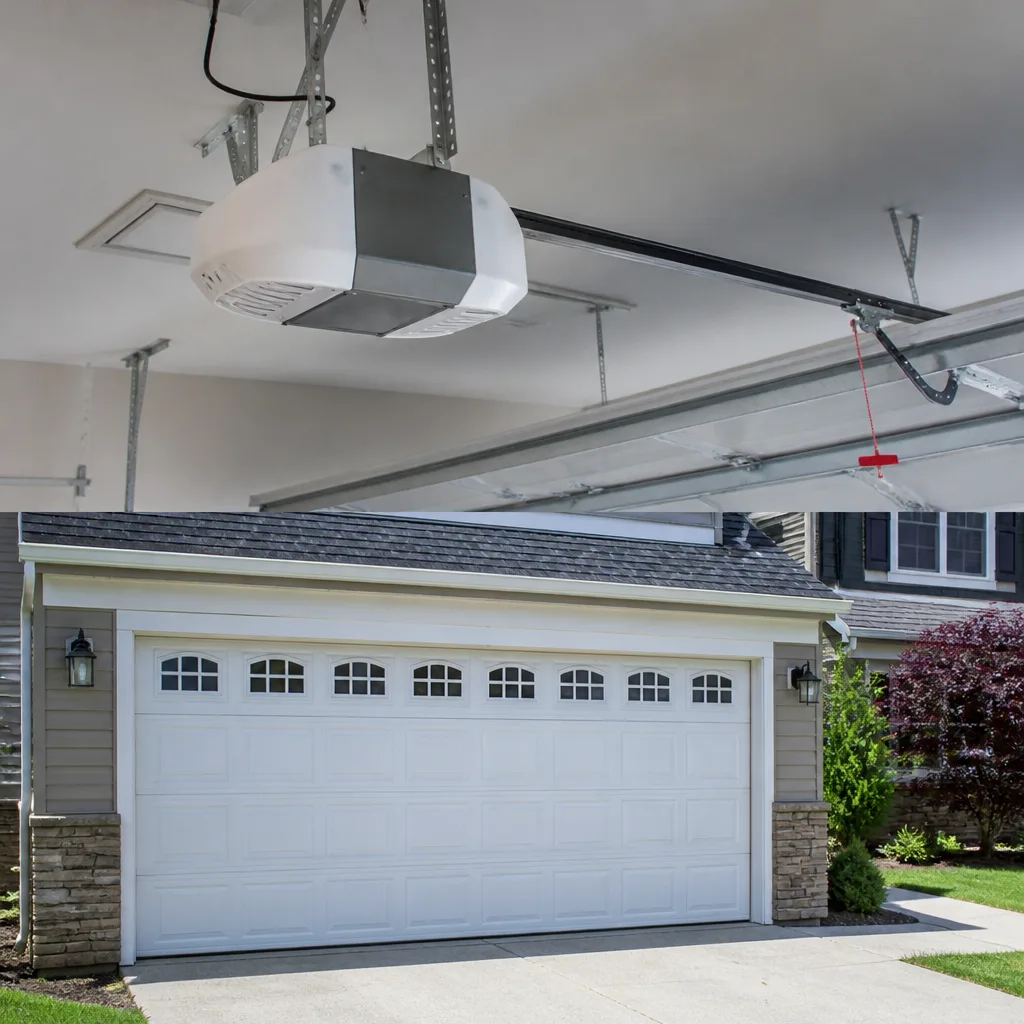 Chamberlain openers
Full 25-point door and opener safety check with every visit - springs, cables, rollers, tracks, and your LiftMaster or Chamberlain opener included
You get a price before we start. It does not change when the pro arrives.
Get your free estimateThe Complete Guide to Garage Doors in Camden
Most homeowners spend more time picking a refrigerator than a garage door. That’s backwards. A garage door is a 500-pound moving part that cycles roughly 1,500 times a year, and in Camden it does that work through some of the harshest seasonal swings in the country. The door you choose, the material it’s made from, and the opener that lifts it all have to survive a climate that freezes, thaws, and refreezes the same slab of concrete dozens of times each winter.
This guide won’t hand you an endless feature list to browse. Instead, we organize every decision around three filters that actually matter in Camden: how your door handles the freeze-thaw cycle, how it matches your home’s architecture, and how it works with your opener. By the end you’ll know when to repair, when to replace, which upsells to skip, and which two upgrades are worth the money. We cover repairs, openers, springs, and full replacement so you can weigh the whole picture before you spend anything.
Quick Answer
Choosing a garage door in Camden comes down to three things: a material and insulation package built for hard freeze-thaw cycles, a style that matches your home’s architecture, and an opener ecosystem that’s compatible with the door’s weight and balance. Steel with a thermal break is the practical default for most Camden homes, wood composite and fiberglass are worth considering for specific styles, and R-value alone is a misleading spec because it ignores air sealing. Repair is usually the right call for a single failed component; full replacement is the cost-effective path when the door is structurally compromised or you’re facing repeated repairs on an aging system.
Styles & brands we work with
- Raised-panel steel
- Carriage house
- Modern flush
- Full-view glass
- LiftMaster openers
- Chamberlain openers
Table of Contents
- How Camden’s Freeze-Thaw Cycle Changes Your Door Choice
- Steel, Wood Composite, or Fiberglass: Which Material Fits Camden?
- Why R-Value Alone Is a Misleading Spec
- Multi-Brand Specialist vs. Single-Brand Dealer
- Repair, Replace Panels, or Full Door Replacement: A Decision Tree
- Wind Load Ratings and When They Trigger a Permit
- Upsells to Skip and the Two Upgrades That Pay Off
- Keeping Your Door Working Through a Camden Winter
How Camden’s Freeze-Thaw Cycle Changes Your Door Choice
Camden’s winters aren’t just cold – they’re inconsistent. Days above freezing followed by nights well below it are normal here, and that cycle repeats dozens of times between late fall and early spring. Water gets into every seam, joint, and gap in a door, freezes, expands, and then thaws. Repeat that a few dozen times and the weakest material in the assembly starts to fail. For a garage door, the weakest points are usually the bottom seal, the panel seams, and any place where dissimilar materials meet.
That pattern is why a door spec sheet built for a mild climate tells you very little about how that door will hold up on a Camden street. A door with a great insulation number but a thin bottom seal will let meltwater pool against its lower panel and freeze there. A door with heavy steel skins but no thermal break will conduct cold straight through the panel and condense moisture on the inside face, which then rusts from the inside out.
What to look for instead of a climate-zone number:
- Section joints that overlap and interlock rather than butt together, so water can’t sit in the seam.
- A thermal break between the exterior skin and the interior skin, so the panel doesn’t act as a cold bridge.
- A bottom seal that makes positive contact with the floor across the whole width, not just in the middle.
- Galvanized or factory-primed steel at cut edges, since bare steel is where rust starts.
- Hardware (hinges, rollers, brackets) rated for cold, because cheap rollers get brittle below freezing.
In our experience, homeowners who replace a door in Camden because it “looked fine in summer” are almost always replacing it because of the seals and the bottom edge, not because the panels themselves wore out. If your current door is letting in water at the base or showing rust along a seam, that’s the freeze-thaw cycle talking. A repair or a panel and seal replacement often buys years. If you’re not sure which way to go, a garage door repair visit is a reasonable first step before you commit to a full replacement.
Steel, Wood Composite, or Fiberglass: Which Material Fits Camden?
There are three material families worth considering for a Camden home, and each one handles freeze-thaw differently. None of them is “best” in the abstract – the right pick depends on your house, your budget, and how much maintenance you’re willing to do.
Steel
Steel is the practical default for most Camden homes. It doesn’t absorb water, it doesn’t warp when it freezes, and modern insulated steel doors come in stamped designs that mimic carriage-house or raised-panel styles convincingly. The weak point is the coating: once the finish chips or scratches, rust starts at the exposed edge. A steel door with a good factory finish and a thermal break between the skins handles a Camden winter well. Choose steel if you want low maintenance and you don’t need a wood look.
Wood composite
Wood composite doors give you the timber look without solid wood’s tendency to swell, cup, and split when it takes on moisture and then freezes. The good ones are engineered with a stable core and a factory-applied finish. They cost more than a comparable steel door and they still need periodic care at the bottom edge where water sits. But if your Camden home has a carriage-house or Craftsman elevation and you want the material to match the trim, wood composite is worth the upcharge. Solid wood doors are a hard sell in this climate – beautiful, but a maintenance commitment.
Fiberglass
Fiberglass doors are light, resist dents, and won’t rust. They’re a reasonable pick for a door that gets bumped a lot or for a homeowner who wants an authentic wood-grain look that can be painted or stained. The tradeoff is that fiberglass handles high heat differently from steel and some panel designs can develop surface cracks in extreme cold cycles. It’s a solid option but a slightly more specialized one – worth discussing with someone who installs it regularly.
If you’re weighing a full replacement, the crew you talk to should be able to walk you through these tradeoffs specific to your home’s orientation and exposure, and garage door installation is where that conversation lives. Whichever material you pick, the model you choose from Clopay, Amarr, or Wayne Dalton will have a version built for cold climates – ask for it specifically.
Why R-Value Alone Is a Misleading Spec
R-value measures how well a material resists heat flow through it. It’s a genuinely useful number, but it tells you almost nothing about how a whole garage door assembly performs in Camden. That’s because R-value is measured on the panel, in a lab, with no gaps around the edges, no joints between sections, and no gaps at the floor. Your door has all three.
What actually happens in a Camden garage in January:
- Cold air pours in through the gaps around the perimeter and under the bottom seal, regardless of panel R-value.
- The section joints leak air between panels, so the effective R-value of a five-panel door is lower than any single panel’s rating.
- A door with a high R-value but a poor seal can condense moisture inside the garage when warm air meets the cold inner panel.
- A door with a modest R-value and excellent sealing can outperform a higher-rated door with poor sealing in real conditions.
The practical takeaway: treat R-value as a tiebreaker, not a headline. A door with a solid thermal break, interlocking sections, and a good perimeter seal at a moderate R-value will usually do better in a Camden garage than a high-R-value door with sloppy weatherstripping. If you’re heating the garage or using it as a workspace, seal quality is the spec that actually changes your bill. If you’re only storing cars and lawn equipment, a moderate R-value with good seals is plenty.
This is also the reason some doors feel cold and drafty even after installation – the door itself is fine, but the seals around it weren’t fitted well. That’s a repair, not a replacement. Our Garage Door Repair Camden team sees this pattern often enough that we usually ask about draft complaints before we quote anything on a new door.
Multi-Brand Specialist vs. Single-Brand Dealer
Here’s a situation that comes up constantly in Camden: your door is a Clopay, your opener is a LiftMaster, and your neighbor’s is a Genie. When something fails, you need someone who works on all three, not someone who will only service the brand they sell. A single-brand dealer isn’t necessarily bad at what they do – but their incentive is to steer you toward the lineup they stock, which can mean replacing perfectly good hardware instead of repairing it.
A multi-brand specialist works across the whole ecosystem. That matters most when your door and opener come from different manufacturers, which is the normal case in most Camden homes. Some examples:
- A Craftsman opener on a Wayne Dalton door – the opener’s travel limits and force settings need to be tuned to that door’s weight, not a default.
- A Genie opener on a Clopay door – the belt or chain tension and the safety sensor alignment have to be set for the door, not the opener.
- A LiftMaster opener on an Amarr door – the same story, and the wall control’s programming needs to match the opener, not the door.
A single-brand dealer may still fix all of these, but only after checking whether you’d rather buy a new unit from them. That’s the difference. A multi-brand specialist has no financial reason to favor one manufacturer over another, so the recommendation is based on what’s actually wrong. We work on LiftMaster, Chamberlain, Genie, Clopay, Amarr, Wayne Dalton, Craftsman, and Raynor – which means when your system crosses brands, we’re already equipped for it. That’s also why garage door opener repair can happen without a second call to a different company.
When you’re interviewing anyone for a Camden job, ask one question: “Do you work on my opener’s brand and my door’s brand, whatever they are?” The answer tells you a lot about how the rest of the conversation will go.
Repair, Replace Panels, or Full Door Replacement: A Decision Tree
Most homeowners jump straight to “replace” or straight to “repair” without working through the middle option. Here’s the decision tree we use, in plain terms. Work through it in order.
- Is the door structurally compromised? If the door has a bent track, a cracked center stile, or panels that no longer line up, and the damage is structural rather than cosmetic, a full replacement is usually the only cost-effective path. Repairs can limp along but the door won’t seal, and a door that won’t seal is a door that lets in Camden’s meltwater.
- Is only one panel damaged? If a single panel is dented or cracked but the rest of the door and track are sound, replacing the panel (or a matched pair of panels if the model is no longer available in a single) is often far cheaper than a new door. This works best on doors still in production, so check the manufacturer and model first.
- Is the failure a single component? One broken spring, one failed roller, one bad hinge, or an opener problem – these are repair jobs, not replacement jobs. Spring repair is the most common case, and it’s also the one you should never attempt yourself (more on that below).
- Is the door aging and requiring repeat repairs? If you’ve paid for three or four repairs in a couple of years on a door that’s past its service life, the math starts favoring replacement. That’s not about the size of any one repair; it’s about the pattern.
- Is the door the wrong spec for the climate? An uninsulated steel door that rusts at every seam, or a wood door that swells every spring, is the wrong door for Camden. Upgrading to a properly spec’d door is a cost-saving move over time, not an upgrade for its own sake.
Start at the top and stop at the first “yes.” That’s your answer. If it’s a repair, it’s a repair – a full door replacement is a large investment and shouldn’t be pushed on a homeowner who doesn’t need one. If it’s a replacement, a free measure and a written price from a multi-brand specialist will tell you what the door actually needs and what it will cost. The final price should be quoted and agreed before any work starts.
Wind Load Ratings and When They Trigger a Permit
A wind load rating describes how much wind pressure a door is designed to withstand without failing. Every door has one, usually printed on the label or in the manufacturer’s documentation. For most Camden homes with a standard two- or three-car garage, the doors sold off the shelf meet the rating the home was built for. Where it gets interesting is on the edges of your exposure zone – an exposed lot at the edge of town, a home on a hill, or a garage wall that faces the open side of a field.
When wind load is a real decision:
- Doors over a certain width or height. Wider doors have more surface area to catch wind, and larger doors often need a higher rating or additional reinforcement.
- Doors on an exposed elevation. A door that takes the full force of prevailing wind needs a rating that matches the actual exposure, not a minimum.
- Doors on a home being modified. New door sizes, new openings, or structural changes usually push the door into permitting territory.
- Doors on a home in a high-wind-design category. Your city’s building department knows the design category for your address. Ask them.
Permit requirements vary by city and by which code cycle is in force, so we won’t guess at a code number for you. In general, most cities require a permit for a door size change, a track or framing modification, or a door that’s part of a structural change to the opening. A straight like-for-like replacement in the same opening often does not require one, but “often” is doing heavy lifting in that sentence. Ask your city’s building department before you schedule the work. It’s a five-minute call and it saves a much more expensive conversation later. On a garage door installation project, we’ll work within whatever your city requires and flag permit questions during the free measure.
Upsells to Skip and the Two Upgrades That Pay Off
Garage door shopping attracts upsells the way a driveway attracts leaves. Here’s the honest cut.
Skip these
- Premium opener features you won’t use. Wi-Fi, voice control, and battery backup are all real features, but if you park in the driveway, get out, and walk in the house, you’re not using any of them. A basic opener with good safety sensors does the job.
- Extended warranties sold as “protection” on a door that already has a manufacturer warranty. Read what’s already covered first.
- Decorative hardware kits on steel doors in a salt-free climate. Hinges, handles, and strap kits look great and last, but they’re cosmetic. Buy them if you like them, not because a technician recommended them as protection.
- “Energy-efficient” claims that don’t come with a number and a seal. If the door’s R-value can’t be verified and the perimeter sealing isn’t included, “energy-efficient” is a marketing phrase, not a spec.
- Full door replacement when a panel and seal replacement solves it. Not an upsell in every case – but it is one when the door was structurally fine.
Do these two
1. Upgrade the bottom seal. This is the highest-return upgrade on any Camden door. A proper bottom seal that makes solid contact with the floor across the full width keeps water from pooling against the bottom panel, keeps cold air out, and keeps insects and small animals out. It costs very little to replace and it’s the part the freeze-thaw cycle punishes first. If you’re going to spend money on one thing, spend it here.
2. Make sure your door has the right torsion spring count. Doors that are heavy for their size, or doors that are wider than standard, often need two torsion springs rather than one. A single spring lifting a door that should have two will wear out far faster, and the door will feel heavy to lift. If you’re replacing springs on a wide or heavy door, ask whether a second spring is the right call. It’s not an upsell – it’s the difference between a spring that lasts and one that fails again in a couple of years.
Keeping Your Door Working Through a Camden Winter
Most garage door failures in Camden happen in the first cold snap of the season, not in the middle of it. That’s because the first hard freeze finds every loose bolt, dry roller, and worn seal on the door at once. A little attention in late fall pays for itself.
Here’s the routine we suggest for a Camden door:
- Test the balance. Disconnect the opener and lift the door halfway by hand. It should stay put. If it drops or rises on its own, the springs are out of balance – call a professional, don’t adjust them yourself.
- Look at the bottom seal. If it’s cracked, torn, or not touching the floor across the full width, replace it before the first freeze.
- Check the rollers and hinges. Loose hinges and worn rollers show up as a rattling door in the first cold week. Tighten what you can reach safely; leave the springs and cables alone.
- Test the safety sensors. Wave an object in front of the sensor on each side. The door should reverse. If it doesn’t, the opener isn’t safe to run.
- Clear the tracks. Debris in the track plus a cold night is a stuck door. Wipe the tracks clean and don’t lubricate them with anything heavy.
A word on springs, because it matters: garage door torsion springs are under extreme tension and store enough energy to cause serious injury. Cables are under similar tension. Do not attempt to adjust, remove, or replace either one yourself. This is the one part of garage door work that genuinely belongs to a trained professional, and it’s the reason spring repair is a named service here rather than something buried in fine print. When a spring breaks, the door usually won’t open safely and it needs to be handled by someone who’s done it before.
Common Mistakes to Avoid
- Buying on R-value alone. A high R-value with bad sealing underperforms a moderate R-value with good sealing in a Camden winter. Check the seals and thermal break too.
- Replacing a door when a panel and seal replacement would fix it. The middle option – replacement panels – exists and is often the right move. Insist on hearing it before you agree to a full door.
- Adjusting springs or cables yourself. The most common serious injury in this trade comes from a homeowner trying to tension a spring. Don’t.
- Hiring a single-brand dealer for a cross-brand system. If your door and opener are from different manufacturers, a brand-agnostic specialist has no reason to steer you toward one lineup.
- Skipping the permit question on a size change. A door that’s a different size than the original opening is a permit question, not a scheduling detail. Ask your city’s building department first.
- Waiting until the first hard freeze to deal with a bad seal. In Camden, the first freeze is when the door stops working well. Attention in October is worth more than repairs in January.
- Believing “energy-efficient” without a number. If the spec sheet doesn’t show the R-value and the sealing detail, the claim is marketing. Ask for the numbers.
See the difference
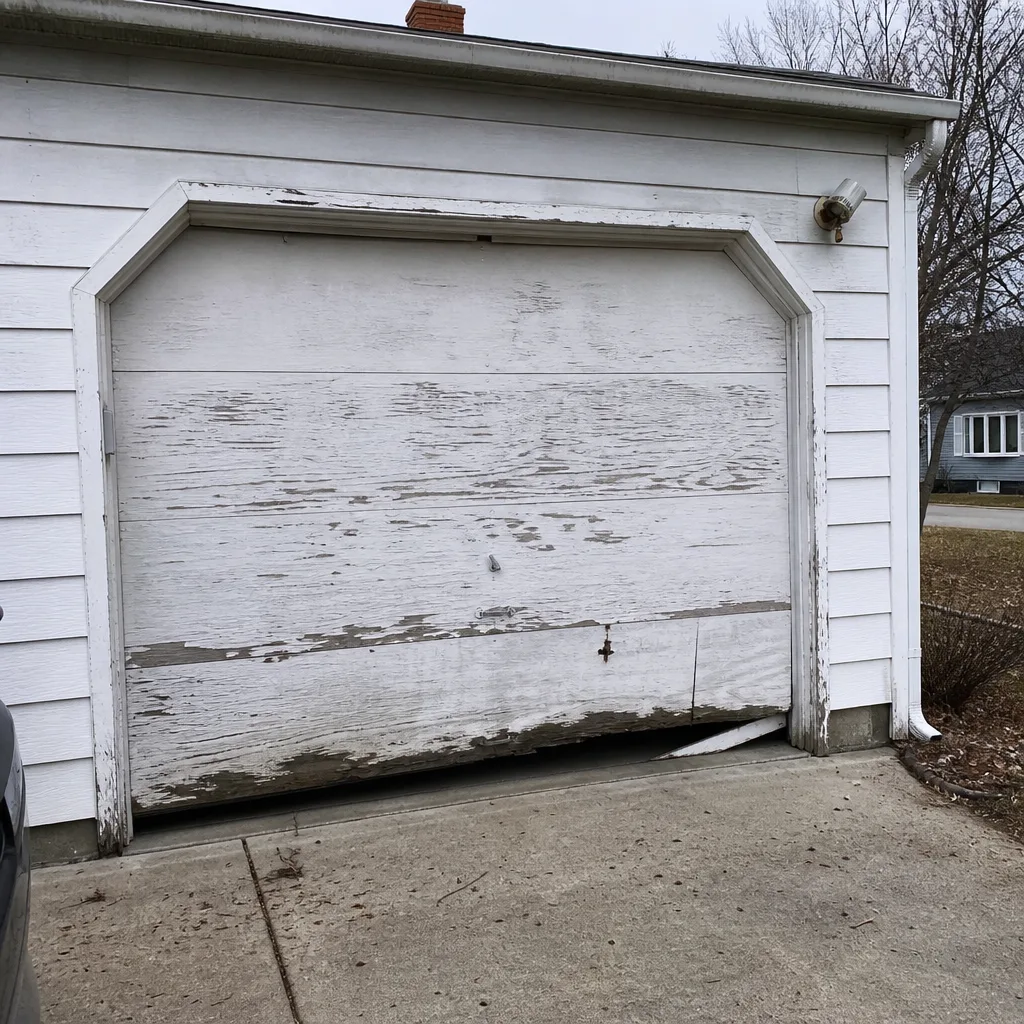 Before
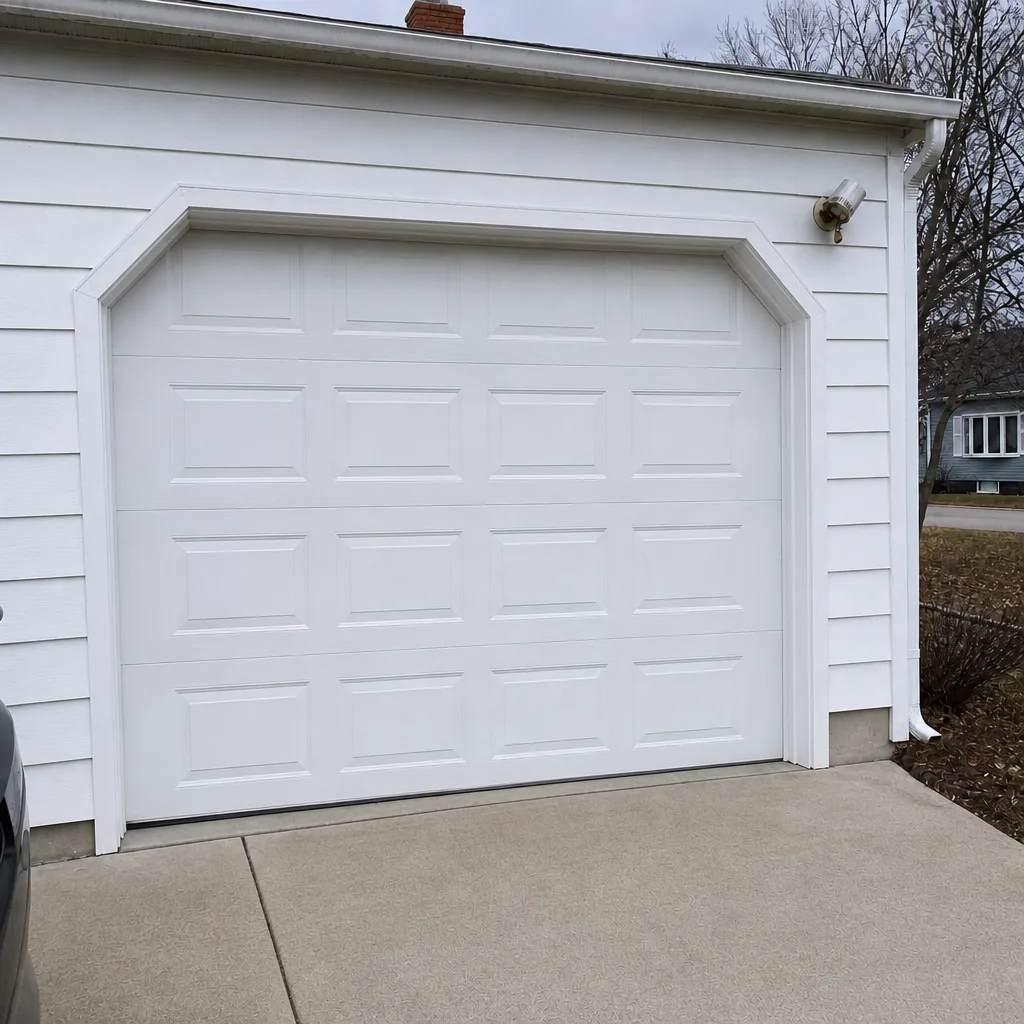 After
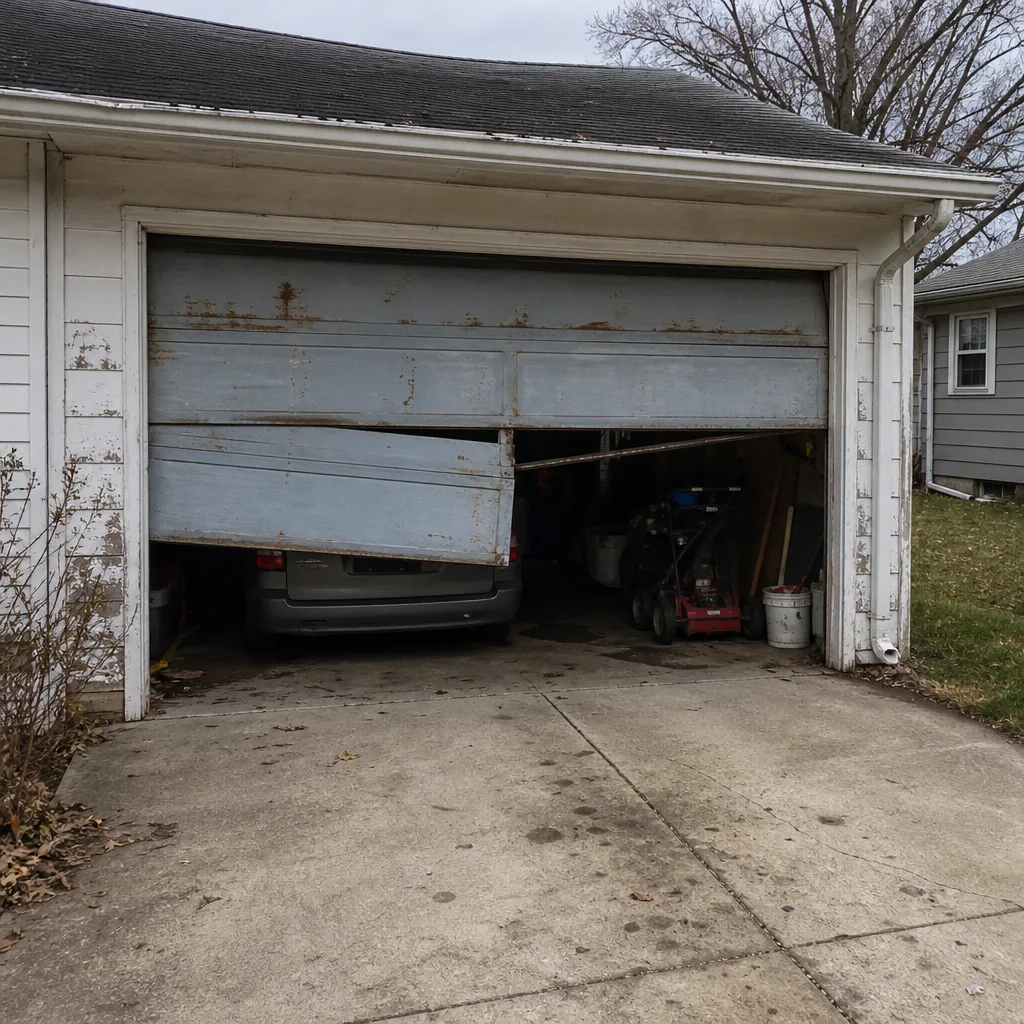 Before
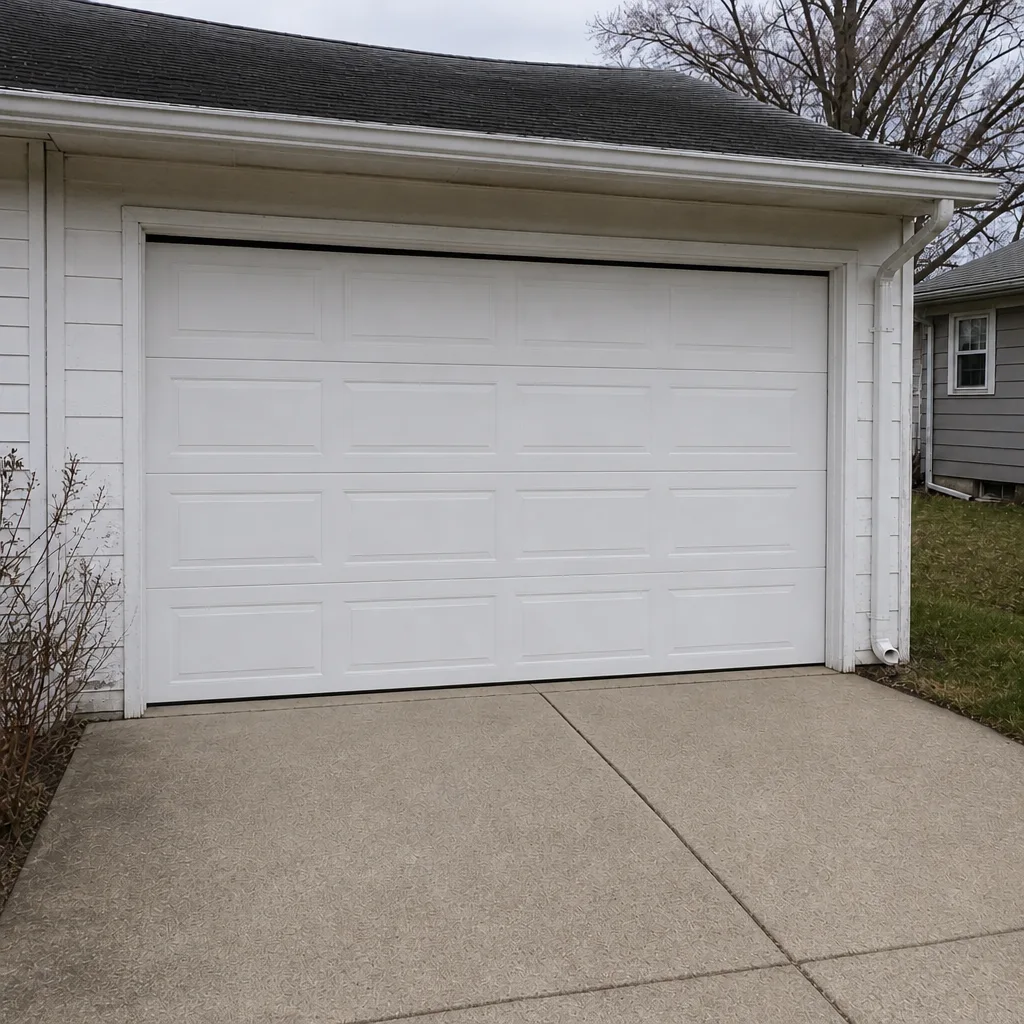 After
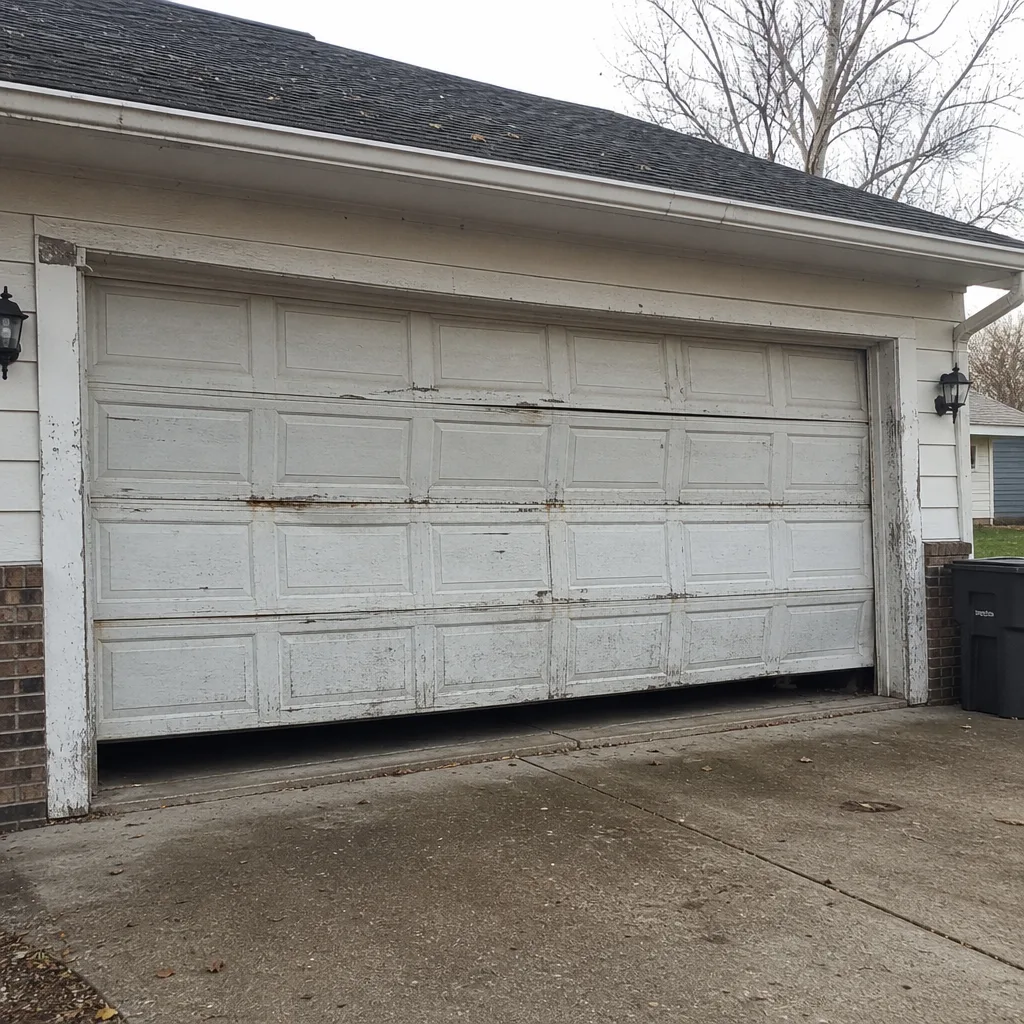 Before
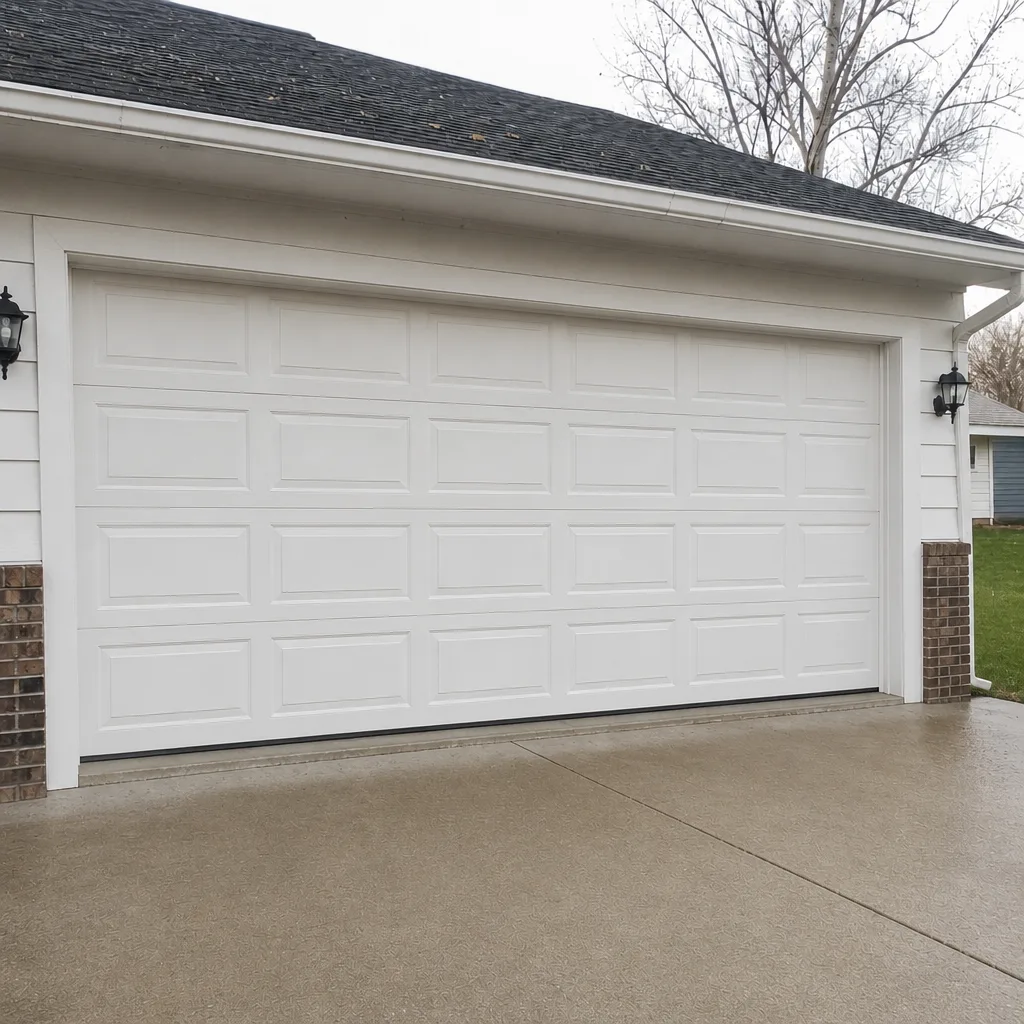 After
When to Call a Professional
Some jobs genuinely belong to a trained technician, and calling early is cheaper than cleaning up afterwards. Call a professional if a spring has broken or the door won’t stay up, if the door has come off its tracks or is visibly out of alignment, if a cable is frayed or loose, if the opener runs but the door doesn’t move, if the safety reverse fails its test, or if a panel or the track is bent. We’d also add: call if the door’s behavior has changed and you can’t tell why. A door that suddenly feels heavy, reverses for no reason, or won’t close all the way is telling you something. Emergency service is available for doors that have failed, and Garage Door Repair Camden offers free estimates in Camden – call (877) 256-1677. Our technicians have up to 10 years of experience, and we work on LiftMaster, Chamberlain, Genie, Clopay, Amarr, Wayne Dalton, Craftsman, and Raynor systems. Prices are quoted and agreed before any work starts, so you’ll know what you’re paying for before anyone touches the door.
Frequently Asked Questions
Most garage door repairs in Camden fall in a moderate range depending on the part that failed – a single spring, a roller, a hinge, or an opener component. A spring repair is typically the higher end of a small repair, while a simple adjustment is at the lower end. The only reliable number is the written estimate for your door, and we don’t quote a final price until we’ve seen the door. Call (877) 256-1677 for an exact quote – estimates are free.
Steel is the practical default for most Camden homes because it doesn’t absorb water and handles freeze-thaw cycles well. Wood composite gives you a timber look without solid wood’s tendency to swell and split, at a higher price. Fiberglass is light, resists dents, and can look convincingly like wood, but it’s a more specialized option. The right answer depends on your home’s style and your tolerance for maintenance.
R-value is measured on a panel in isolation, without the gaps around the edges, the joints between sections, or the space under the bottom seal. Your door has all three, and they leak air regardless of panel R-value. A door with a moderate R-value and excellent sealing can outperform a high-R-value door with poor sealing. Treat R-value as a tiebreaker and check the seals first.
Permit requirements vary by city and by code cycle, so the only reliable answer comes from your city’s building department. In general, most cities require a permit for a size change, a track or framing modification, or a door that’s part of a structural change to the opening. A like-for-like replacement in the same opening often doesn’t require one, but ask your building department to confirm before scheduling the work.
A multi-brand specialist works on whatever system you have, which matters when your door and opener come from different manufacturers – the normal case in most Camden homes. A single-brand dealer has a financial incentive to steer you toward the lineup they sell. A brand-agnostic specialist has no such incentive, so the recommendation is based on what’s actually wrong with your door.
The local professional who performs the work is licensed and insured as their state requires. We connect you with a vetted local professional who does the job, and we make sure the price is quoted and agreed before any work starts. If you have questions about credentials on a specific job, ask when you call – (877) 256-1677.
The Bottom Line
A Camden garage door decision comes down to three filters: how the door handles freeze-thaw, how it matches your home, and how it works with your opener. Steel with a thermal break is the practical default for most homes; wood composite and fiberglass are worth considering for specific looks. Ignore R-value as a headline and check the seals and thermal break instead. Choose a multi-brand specialist over a single-brand dealer so the recommendation isn’t tied to a manufacturer’s lineup. Repair when the failure is one component, replace panels when one panel is damaged, and replace the whole door only when it’s structurally compromised or the pattern of repairs has tipped the math. Add a proper bottom seal and the right torsion spring count, and skip the rest of the upsells. Two upgrades that pay off, and a lot of noise you can leave on the shelf.
When you’re ready to stop guessing and get a real number, call Garage Door Repair Camden at (877) 256-1677 for a free estimate. We’ll look at the door, explain what we find, and quote a price in writing before any work starts. Emergency service is available if the door has already failed.
Written by the team at Garage Door Repair Camden.