Last updated November 22, 2026
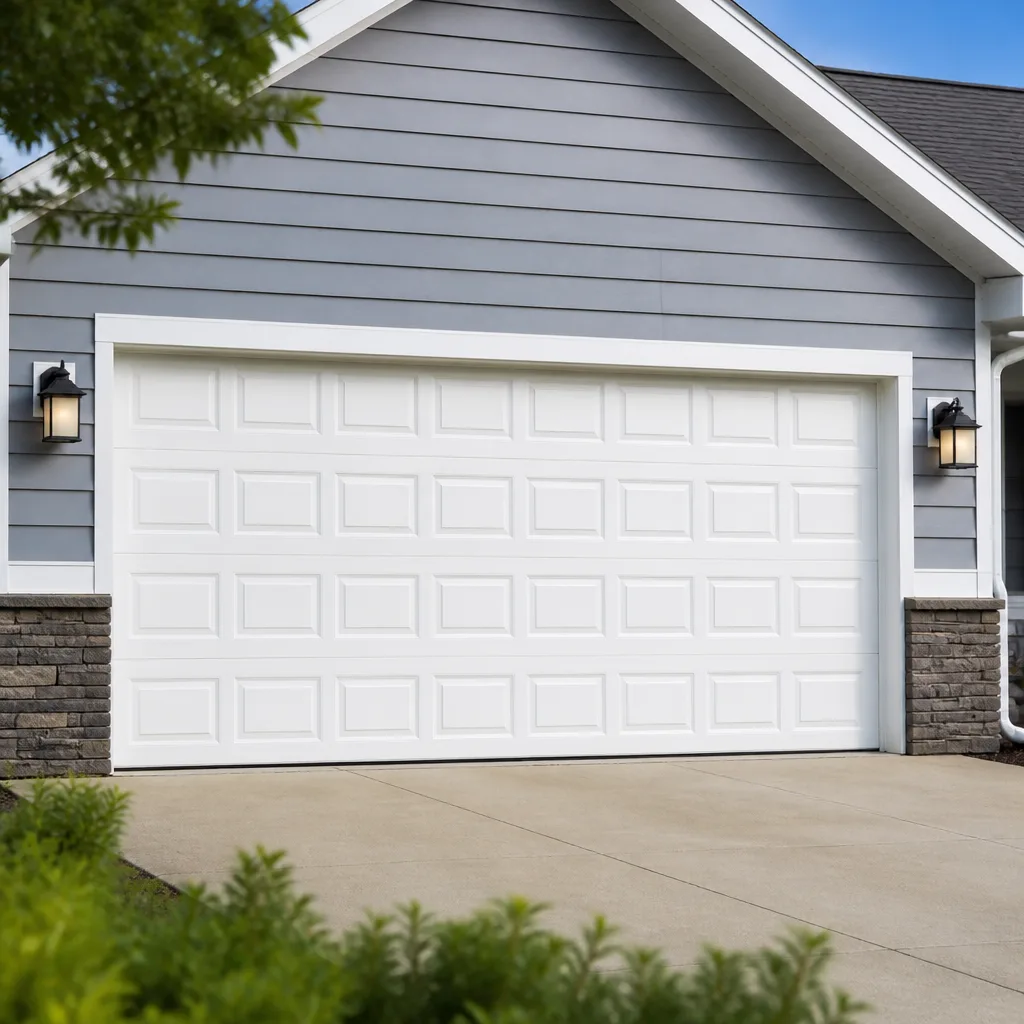 Raised-panel steel
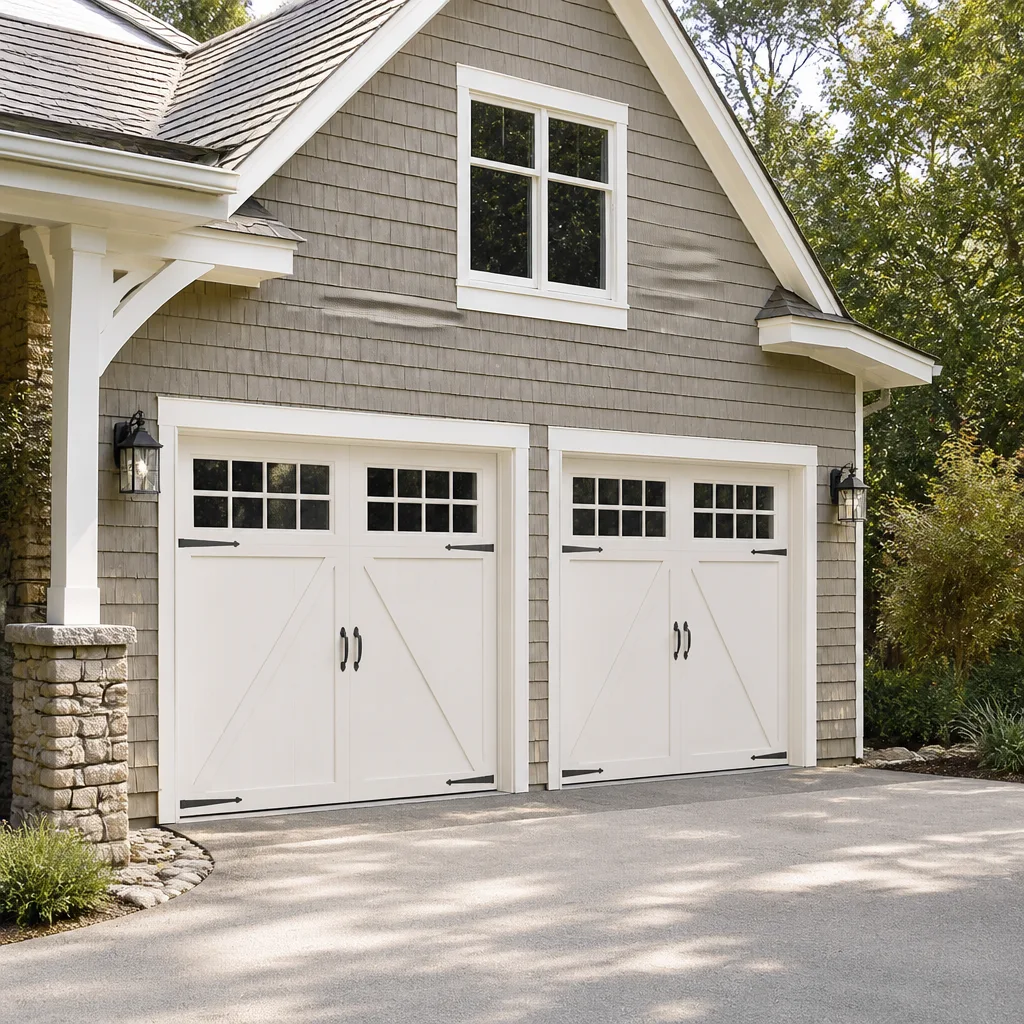 Carriage house
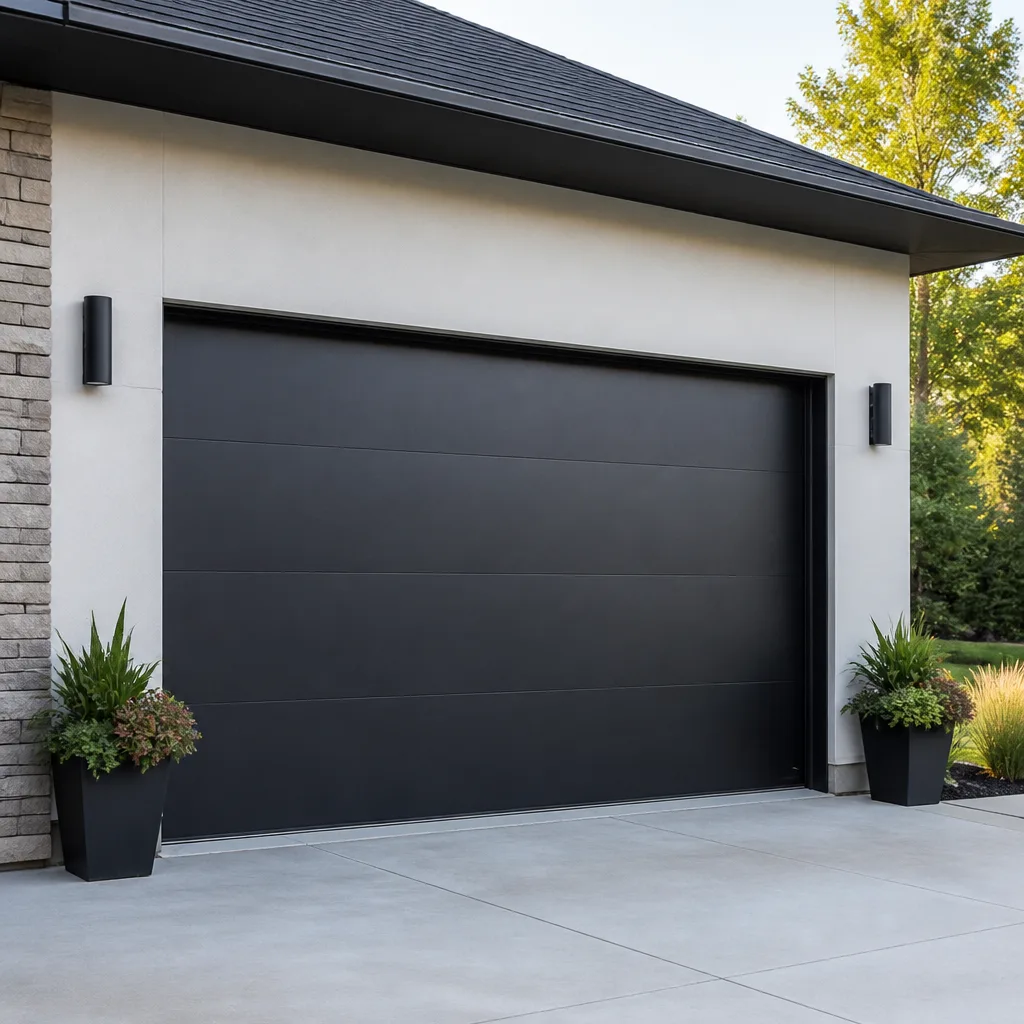 Modern flush
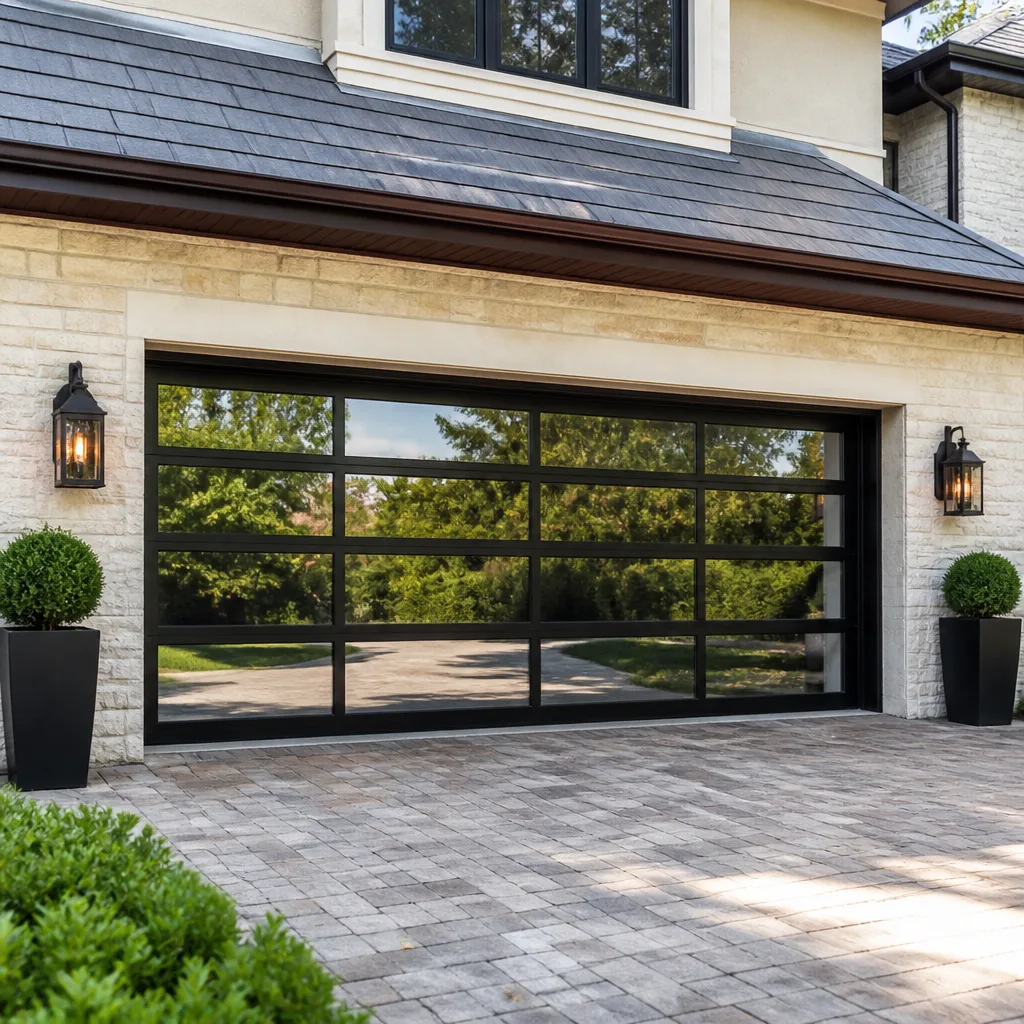 Full-view glass
 LiftMaster openers
 Chamberlain openers
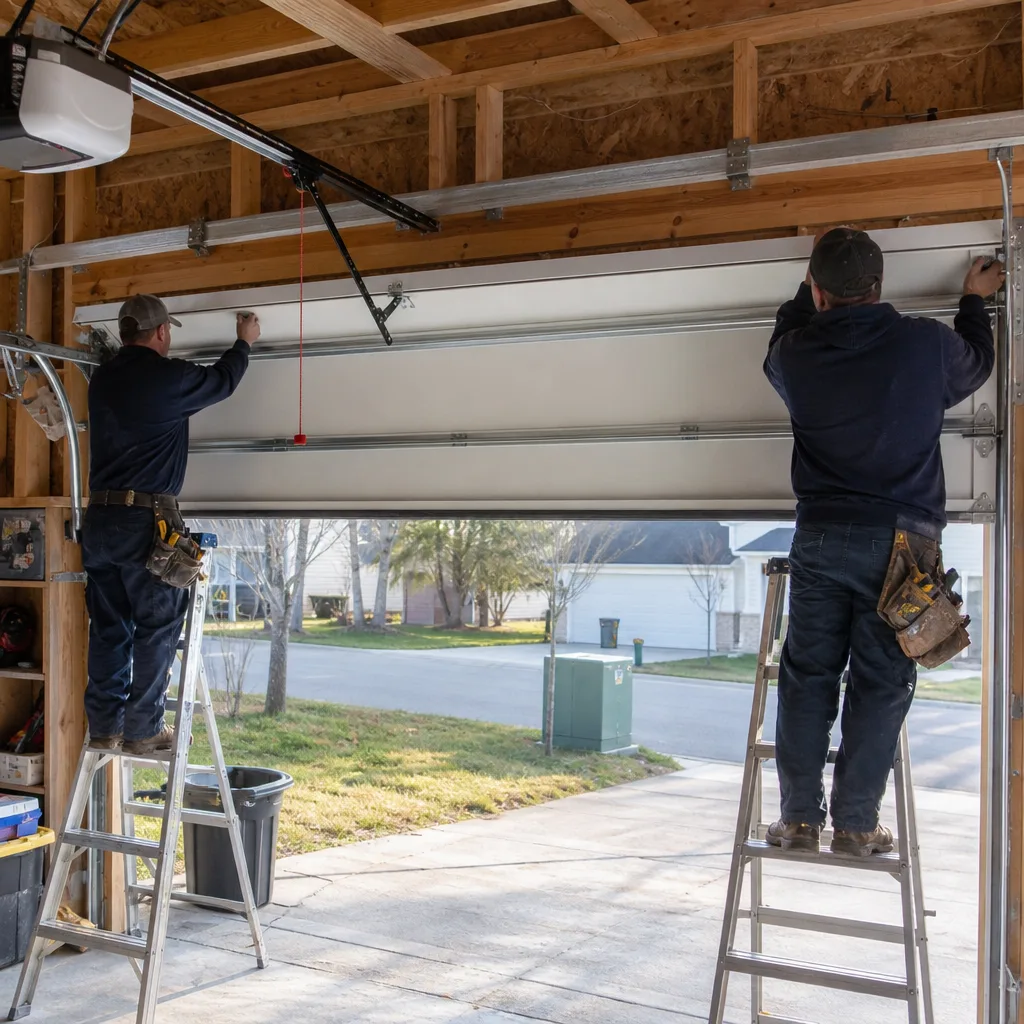
Full 25-point door and opener safety check with every visit - springs, cables, rollers, tracks, and your LiftMaster or Chamberlain opener included
You get a price before we start. It does not change when the pro arrives.
Get your free estimateSeasonal Garage Door Care for Camden: Year-Round Homeowner’s Guide
Most homeowners assume a garage door wears out evenly across the year, a little each month, like tires on a car. It doesn’t work that way. In Camden, the calendar is lopsided: winter and the spring thaw do the heavy damage, and the two prep windows that prevent it fall in October and April. Miss those windows and you spend the rest of the year reacting to failures instead of preventing them. A spring that snapped in February was usually telling you something back in September, when the summer heat had quietly shifted the door’s tension and nobody re-checked it. This guide walks through a Camden garage door year one season at a time, with the checklists and the reasoning behind each task.
Quick Answer
Seasonal garage door care in Camden comes down to two critical prep windows and a lighter round of checks in between. In October, before the first hard freeze, re-check spring tension after summer heat has expanded the door sections, swap to a cold-rated lubricant, and clear the threshold so ice can’t bind the bottom seal. In April, once frost heave has finished moving the ground, inspect the floor seal and track alignment for shift. Summer and the storm season in between call for wind-resistance and auto-reverse checks. Get October and April right and the other ten months mostly take care of themselves.
Styles & brands we work with
- Raised-panel steel
- Carriage house
- Modern flush
- Full-view glass
- LiftMaster openers
- Chamberlain openers
Table of Contents
- Why Camden’s Seasons Don’t Wear a Door Evenly
- The October Prep Window: Five Tasks Before the First Freeze
- Summer Heat, Expanding Sections, and Shifting Spring Tension
- The April Thaw Inspection: Frost Heave and Track Misalignment
- Lubricant Selection by Season: Why July’s Product Fails in January
- Storm Season Prep: Wind Resistance and Auto-Reverse
- Midwinter Checks: Slow-Open and Frozen Thresholds
- Common Mistakes to Avoid
Why Camden’s Seasons Don’t Wear a Door Evenly
A garage door is a tension system, and tension doesn’t care about the calendar. It cares about temperature and about whether the structure around it is still sitting where it was last month. Camden runs a full four-season climate, which means the door and everything attached to it go through a real expansion and contraction cycle every year, plus a ground-movement event every spring when the frost leaves the soil. That combination is why the wear is front-loaded into two periods rather than spread out.
Here’s the mechanism, in plain terms. Summer heat expands the metal sections of the door. They grow slightly, the door gains a little weight and a little bulk, and the springs that balance it are now working against a slightly different load than they were set for. The springs themselves don’t expand with the heat the same way the door does. So by the time September and October arrive, the balance has quietly drifted. Then winter stress hits – cold stiffens the lubricant, the metal contracts, ice forms at the threshold – and the spring or the opener is doing its work against a system that was already out of adjustment.
In our experience, and in the pattern our technicians see on service calls around Camden, that fall re-check is the single highest-return hour of maintenance in the whole year. It doesn’t fix anything dramatic. It just puts the door back where it’s supposed to be before the season that stresses it most arrives. Around the neighborhoods in Camden, doors that were re-checked in the fall and again in the spring are the ones that don’t surprise their owners in January.
So this guide is organized around those two windows, October and April, rather than handing you twelve months of evenly spaced tasks. There’s work to do in summer and midwinter too, but it’s lighter and it’s reactive. Garage Door Repair Camden put this together because the questions we get most are about why a door misbehaves in a particular season, and the answer is almost always upstream of the problem.
The October Prep Window: Five Tasks Before the First Freeze
October is when Camden garage doors get ready for winter, and five tasks cover the three most common winter failure modes: a frozen threshold, a door that opens slowly or not at all in the cold, and a spring that snaps under winter stress. Do these before the first hard freeze and you’ve prevented the majority of what goes wrong in January and February.
- Have the spring tension re-checked. This is the most important one and the one most homeowners skip, because a spring that’s out of balance doesn’t look wrong. A trained technician checks the balance by hand and by weight, and adjusts or recommends replacement if the summer’s expansion has left the door out of tune. Spring work is genuinely dangerous: the torsion springs and the cables that hold the door’s full weight are under extreme tension, and the cables can do serious injury if they let go. Don’t attempt to adjust tension yourself. This is why spring repair is a named, specialized service for us rather than something buried in a general repair list.
- Swap to a cold-rated lubricant. The product that keeps the rollers and hinges moving smoothly in July can turn to a stiff paste when the temperature drops to the single digits and below, which is exactly when the door needs to move freely. We cover the specific choices in the lubricant section below.
- Clear the threshold and inspect the bottom seal. A threshold packed with debris becomes a place for ice to form and bind the door. Sweep it out and check that the bottom weather seal is intact and sitting flat, so it can seal against the floor without catching.
- Test the opener’s force setting and auto-reverse. Cold stiffens everything, including the resistance the opener has to overcome. Make sure the opener isn’t set so tight that a slightly stiffer cold door trips its safety limit and reverses. Test that the door reverses when it meets an obstruction.
- Check the weatherstripping and hard-to-reach hardware. Look at the seal around the frame, tighten any loose hinge or roller hardware, and note anything that looks worn. Small misalignments become bigger ones once ice and contraction start working on them.
None of these are difficult, but the spring check is the one that needs a trained eye and hands that shouldn’t be near a loaded torsion spring. If it’s been a while since the door was serviced, this is the moment. A garage door repair visit in October is cheap insurance for the winter ahead.
Summer Heat, Expanding Sections, and Shifting Spring Tension
Summer is the quiet season for garage door problems, which is exactly why homeowners don’t connect it to the failures that show up months later. Heat causes metal door sections to expand slightly. On a multi-section door, each panel grows a little, and the cumulative effect is a door that has gained weight and changed its balance point. The springs, which hold the door’s weight in balance, now have a slightly different job than they were set up for.
You won’t usually notice this in July. The door still opens and closes. It might sound a touch different, run a touch slower, or leave the opener working a little harder, but those signals are easy to miss when the door is functioning. Over the course of the season the tension drifts, and the fall re-check is where you catch it and correct it before the cold arrives. This is the seasonal rule of thumb for Camden: the heat sets the stage, and the fall adjustment closes it out.
Summer is also when you should watch the door’s operation for early clues. Things worth noting:
- Any change in how the door sounds at the top of its travel.
- A door that seems to sag or sit unevenly when closed.
- An opener that hesitates, or reverses without hitting anything.
- Visible gaps or uneven gaps between door sections.
If any of these show up, get them looked at while it’s warm and the repair is unhurried. If the opener itself is the issue, that’s a different job from the door – see our garage door opener repair page. The point is that summer is the season to observe and correct, not to wait out.
The April Thaw Inspection: Frost Heave and Track Misalignment
Spring in Camden brings frost heave – the ground swelling and settling as the frost leaves the soil – and the garage floor and the ground around the track foundations move with it. April, once the ground has mostly finished moving, is the window to check whether the door still sits and rolls where it should. The two things to inspect are the floor threshold seal and the track alignment.
Start with the floor seal. Frost heave can push up or drop the slab, or move the seal that sits against it, leaving a gap at the bottom of the door or a seal that catches and drags. A gap matters for weather and for pest intrusion; a dragging seal wears and stresses the opener. Walk the full width of the bottom of the door with it closed and look for daylight, then look for signs the seal is compressed unevenly or torn.
Then check the tracks. Ground movement under one side can pull or push a track out of plumb, and a track that was true in the fall can be off by spring. Signs of misalignment:
- The door runs rough, binds, or sounds like it’s grinding on one side.
- The gap between the door and the track is larger on one side than the other.
- Rollers look worn or sit crooked in the tracks.
- The door doesn’t sit level when closed.
If the tracks look out of alignment, don’t force them straight with a hammer or pry bar. Track and spring tension work together, and a track adjustment made while the door is loaded can release tension unpredictably. Tracks are part of the door system, and an April service visit is the right way to correct them. Our technicians have up to 10 years of experience with exactly this kind of season-by-season adjustment along the Camden streets.
Lubricant Selection by Season: Why July’s Product Fails in January
The lubricant that works in summer can turn to a thick paste at -15°F, and that’s the core of this section: the same product isn’t right for all four seasons in Camden. In warm weather a heavier lubricant stays fluid and protects the moving parts. In deep cold it stiffens, adding resistance the opener has to push through, and a stiff door plus a cold morning is how slow-open calls happen.
What to use instead depends on the season and the part:
- Summer and fall (warm and cooling): a silicone-based or lithium lubricant is fine for most hinges and rollers. It holds up in heat and doesn’t attract as much grit as heavier products.
- Winter (freezing and below): switch to a cold-rated lubricant on the rollers, hinges, and springs. A light, low-temperature product stays fluid where a summer grease would turn stiff.
- Springs themselves: a dedicated spring lubricant, applied sparingly, reduces friction without attracting debris. Don’t slather it on – excess attracts dirt.
- Never use WD-40 as a long-term lubricant on the moving parts. It’s a solvent and a light short-term spray, not a lasting lubricant, and it can wash away the protection the door needs.
The practical move is to change the lubricant as part of the October prep and again, back to a warmer-weather product, as part of the April check. If you’re not sure what’s currently on your door, a technician can tell you and switch it as part of a service visit. The other reason this matters: cold-stiff lubricant plus a door that has drifted out of balance is the setup for a winter spring failure. Fix the lubricant and fix the balance, and the cold month is a lot less interesting.
Storm Season Prep: Wind Resistance and Auto-Reverse
Severe weather comes with the territory in Camden, and a garage door is a large surface that has to hold up to wind. Before storm season, two checks are worth doing: the door’s wind resistance and the opener’s automatic reverse sensitivity. Both are about making sure the door behaves safely when something unusual happens, whether that’s a strong gust or an obstruction in the door’s path.
On wind resistance, the question is whether the door and its hardware are rated for the wind loads it’s likely to see, and whether the door is still in the condition it was when installed. Loose or worn hardware, a misaligned track, or a door that’s been dented weakens the system’s ability to hold against wind. If your area sees high winds, it’s worth asking whether your door meets the wind rating the local code expects – a question for your city’s building department, not a guess. Knowing that rating also tells you whether replacement, not repair, is the right call when a door starts to look tired.
On auto-reverse: it’s a safety function that reverses the door when it meets an obstruction, and it needs to actually work. Test it by placing a test object in the door’s path and checking that the door reverses on contact. If it doesn’t, that’s an opener adjustment – and if adjusting the opener doesn’t bring it back, the opener may need service or replacement. If the door is fine but the opener is the problem, our garage door opener repair handles the electronic side.
Storm season is also the time to think about the door’s storm readiness as a whole: tight seals, secure hardware, and a door that runs smoothly under normal operation. A door that struggles in fair weather will struggle more in a storm.
Midwinter Checks: Slow-Open and Frozen Thresholds
Once winter sets in, the work shifts from prevention to monitoring, mostly two things: a door that opens slowly or hesitates, and a frozen threshold. Both are normal cold-weather behaviors up to a point, and both signal something to fix when they go past it.
A slow-open in cold usually comes from one of three things: a cold-stiff lubricant adding resistance, a door that’s slightly out of balance so the opener is doing more work, or an opener force setting that needs attention. A door that opens slowly but reliably is often just fighting the cold. A door that struggles or reverses is telling you it needs a look.
A frozen threshold is the bottom seal freezing to the floor or to ice in the threshold. Often the fix is mechanical: clear the ice, keep the threshold clear, and make sure the bottom seal isn’t the thing that’s binding. Don’t force the door through ice – that’s how you strip a gear on the opener or damage the seal further. If a frozen threshold keeps happening, the seal and threshold are the place to look.
If winter throws something you can’t handle safely, that’s what our emergency garage door service is for. It isn’t an upsell tacked onto a repair business; it’s a dedicated offering for the calls that can’t wait. Call us and we’ll work out a visit. And if the door is stuck because a spring has gone, don’t touch the spring – a loaded spring doesn’t care how careful you are, and the cables are the dangerous part.
Common Mistakes to Avoid
These are the ones our technicians see most often around Camden, and each one tends to make the next season’s problem a little worse:
- Adjusting a torsion spring by hand. A loaded torsion spring stores a lot of force, and the cables that hold the door’s weight can injure badly if they release. This is a trained-professional job. A door that’s out of balance should be re-checked and adjusted by a technician, not by the homeowner.
- Using the same lubricant all year. A summer-weight product that turns to paste in January is a slow-open waiting to happen. Swap to a cold-rated product as part of the fall prep.
- Skipping the October spring re-check. The most common reason a spring fails in deep winter is that the door drifted out of balance over summer, and nobody corrected it before the cold. It’s the single most valuable fall task.
- Ignoring the April track alignment. Frost heave moves the ground, and a track that was true in the fall can be off by spring. Bending a track straight by force, with the door still tensioned, is a good way to make it worse.
- Forcing a frozen door. Pushing the door through ice stresses the opener and the seal. Clear the threshold first and treat the frozen threshold as a sign to look at the seal.
- Leaving auto-reverse untested. It’s a safety feature, and it needs to work before storm season. Test it each fall and spring.
- Calling a generalist for a brand-specific problem. A Craftsman or Raynor opener has its own parts and adjustments, and a generalist who works on everything has less depth on any one system than a multi-brand specialist.
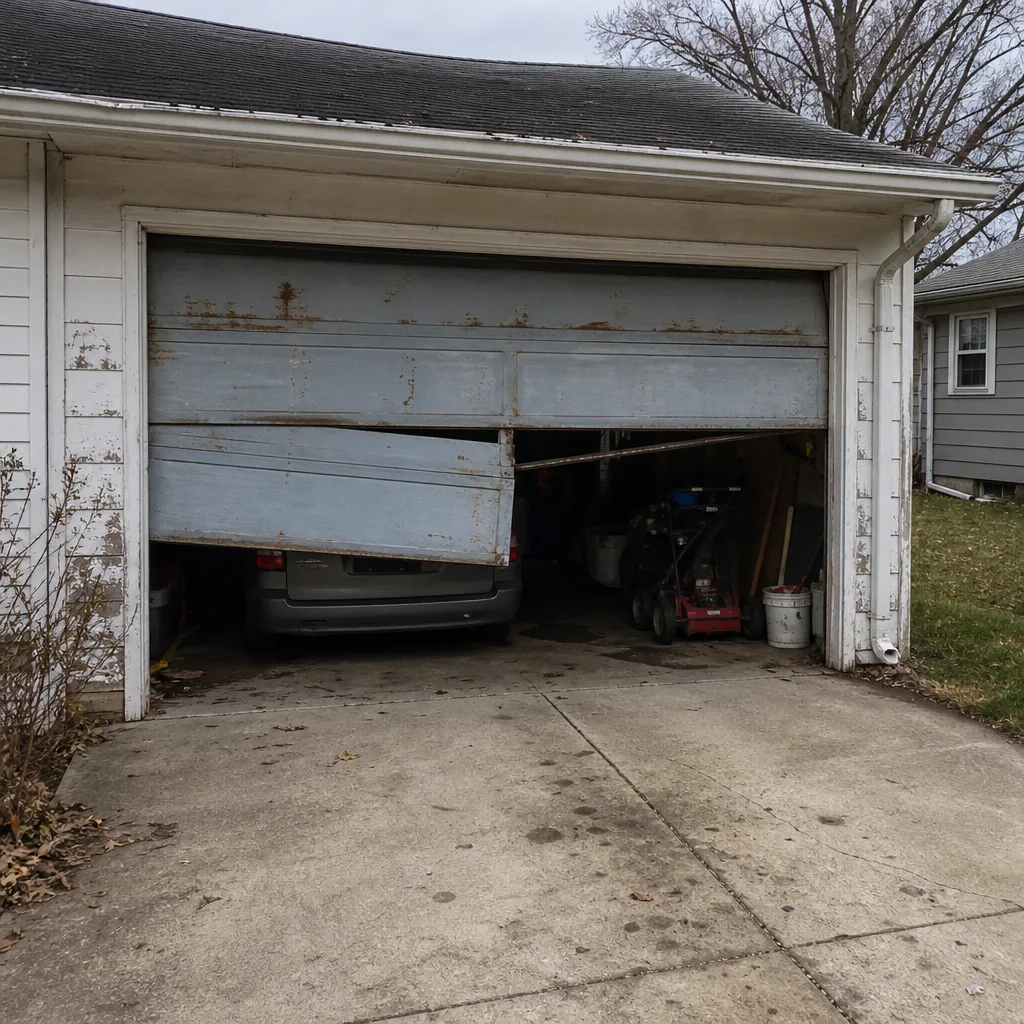
See the difference
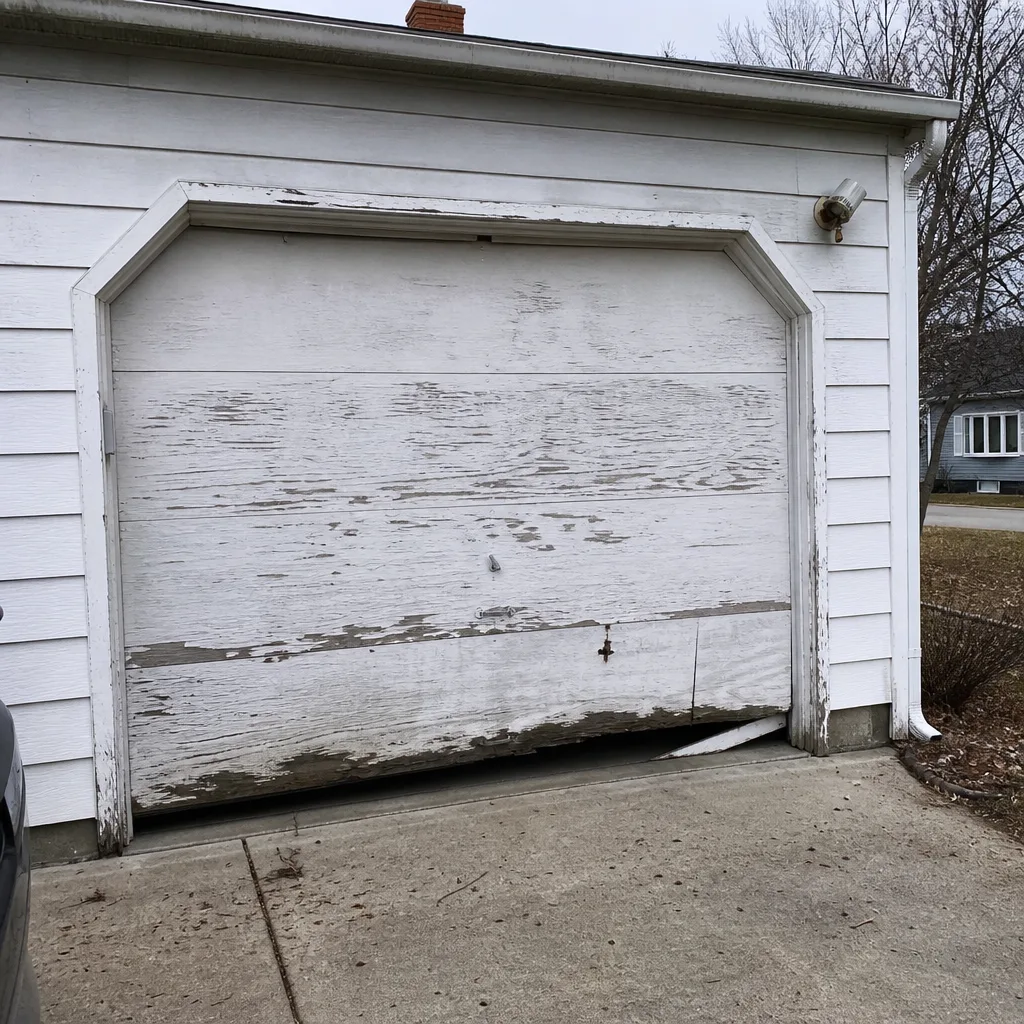 Before
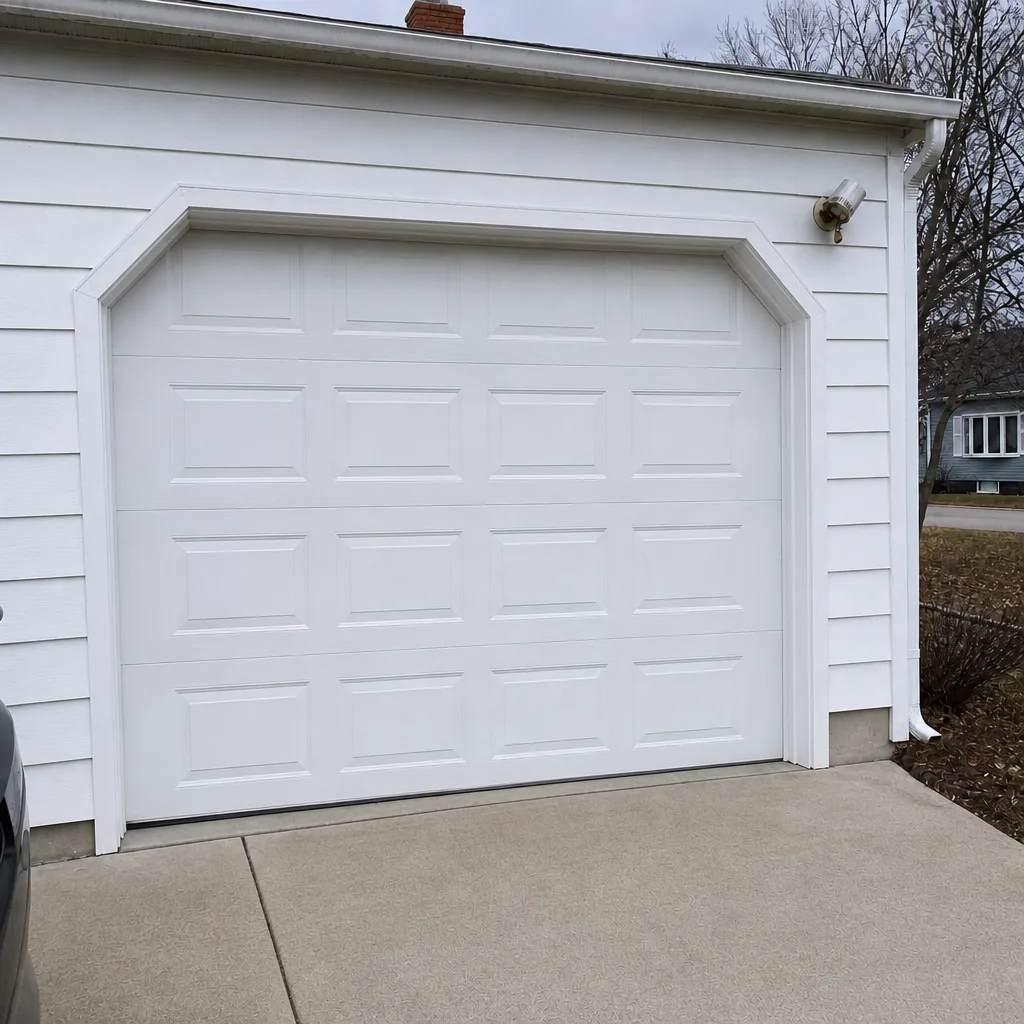 After
 Before
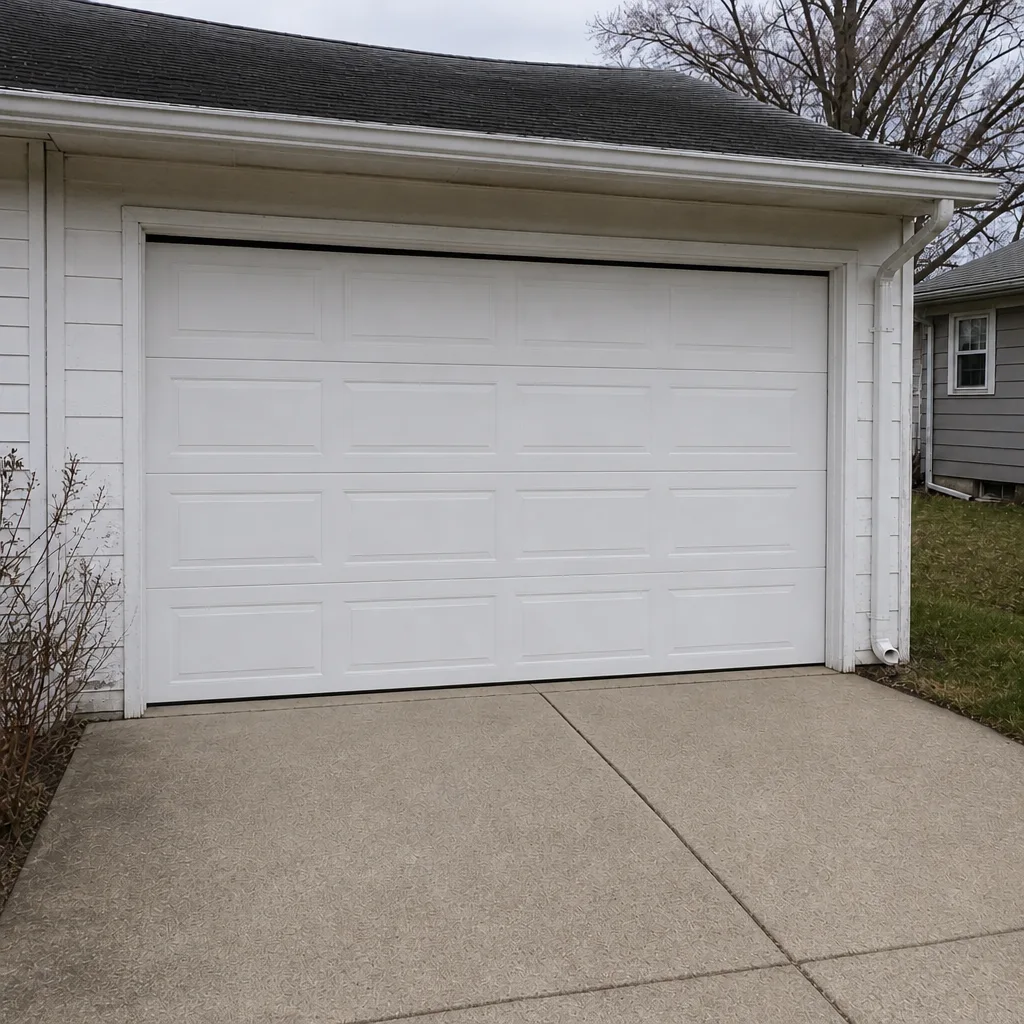 After
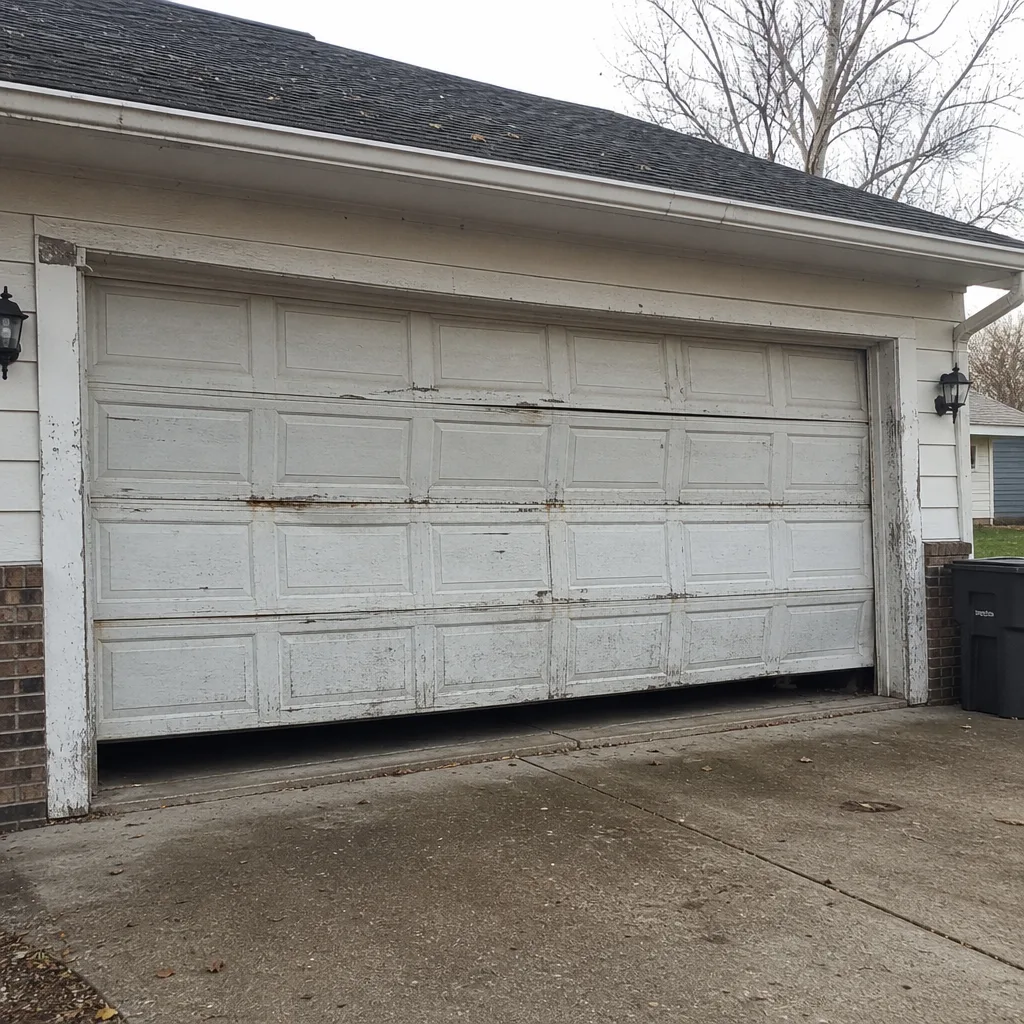 Before
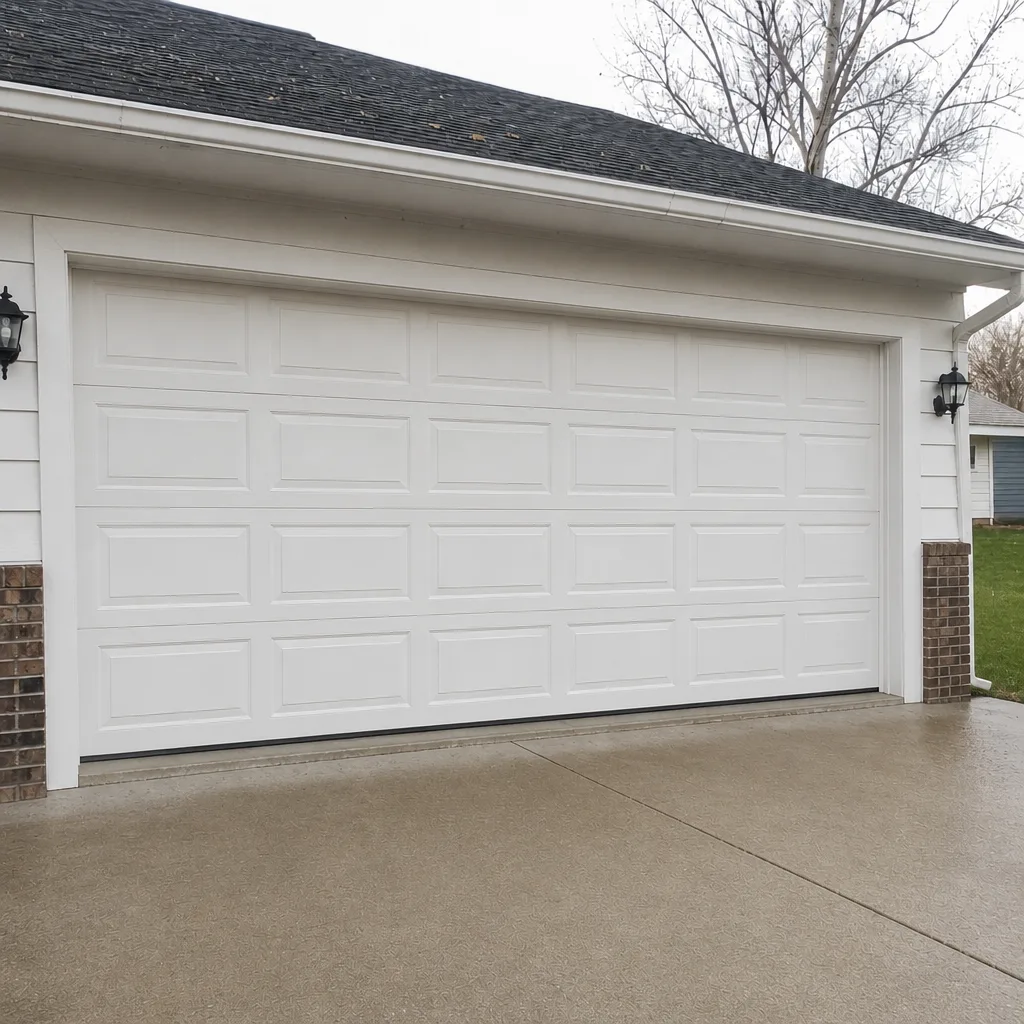 After
When to Call a Professional
Some jobs are safe for a homeowner with a ladder and a little patience – lubricating the rollers, sweeping the threshold, testing the auto-reverse, and watching the door’s operation for changes. The rest call for a trained professional, and this trade has a few that are worth flagging plainly. Anything involving the torsion springs or the cables is a professional job; those parts hold the door’s full weight under extreme tension, and a mistake can injure badly. Track adjustment, opener force and limit settings, and any repair after a spring failure or a door off its tracks also belong with a technician. And if a door has been binding or running rough for a season, a service visit finds the cause before it becomes a failure. Garage Door Repair Camden offers free estimates in Camden – call (877) 256-1677.
Frequently Asked Questions
Twice a year: October, before the first freeze, and April, after the ground has settled. October is when the door gets re-balanced and switched to cold-rated lubricant, and April is when the track alignment and floor seal get checked after frost heave. A single annual service is better than none, but the two-window schedule is what matches the Camden season cycle.
Because the door’s balance drifts over summer heat, and the cold is when that out-of-balance door is under the most stress. Spring repair in winter is common, but it’s often the result of a fall re-check that didn’t happen. Getting the tension checked in October is the way to reduce the odds. Call (877) 256-1677 for an estimate on spring repair.
A cold-rated lubricant by the time the first freeze arrives, and a silicone or lithium product for the warmer months. The summer product can turn to paste in deep cold. Use a dedicated spring lubricant on the springs, applied sparingly, and don’t rely on WD-40 as a long-term lubricant.
Spring repair is quoted per job after a technician looks at the door, because the price depends on the spring type, the number of springs, and the door. The written estimate sets the final price, and the price is agreed before any work starts. For a free estimate, call (877) 256-1677.
It moves the ground under the garage floor and the track foundations, which can leave a gap at the bottom seal or pull a track out of alignment. That’s why April is the inspection window in Camden. Signs include the door running rough or a gap at the bottom.
Our technicians are experienced with the door and opener brands you’ll find in Camden homes, including LiftMaster, Chamberlain, Genie, Clopay, Amarr, Wayne Dalton, Craftsman, and Raynor. The local pro who does your work is licensed and insured as their state requires. Call (877) 256-1677 for a free estimate.
The Bottom Line
Garage door care in Camden isn’t twelve equal months of work. It’s two prep windows that catch the wear early and a lighter set of checks in between. October does most of the heavy lifting: the spring re-check that corrects summer’s drift, the cold-rated lubricant, the clear threshold, the openers tested. April finishes the job: the floor seal and track checked after frost heave has stopped moving the ground. Summer is for observing, winter is for monitoring, and the storm season check on wind resistance and auto-reverse protects the door when the weather turns. Get the two windows right and you’ll spend far less of the year fixing what the seasons did.
When you need a hand with any of it – a spring, a track, an opener, or a full garage door installation – our team works on your brand, from Craftsman to Raynor to LiftMaster, and puts the price in writing before the work starts. Call (877) 256-1677 for a free estimate. Same-day service and fast dispatch from 7am to 7pm; free estimates, upfront pricing, and a satisfaction guarantee.
Written by the team at Garage Door Repair Camden.